


Last week, I went on Semafor’s Mixed Signals podcast and said that I want to be “algorithmically ungovernable”. How can I create and consume media that rejects what a math model would serve up? I talked about how I’m inspired by accounts that feel decidedly unoptimized, like Errands and yapmeals. (You can listen to our full conversation here.)
Today’s newsletter continues to pull on that thread. What does it feel like to be online right now? There’s no one I’d rather tackle that question with than Ruby Justice Thelot.
Ruby is a designer, multi-disciplinary artist, cyberethnographer, and professor of design and media studies at NYU. He is also the author of the Substack being-on-line and the forthcoming book In Defense of Being-On-Line. It’s his job to study the way humans interact with the internet. We obviously had a lot to discuss.
I talked to Ruby about whether brands can have taste, his media consumption rules (“1 weekend of TikTok per month”), and why you should be proud of posts that flop.
Rachel Karten: First, can you tell me a little bit about the work that you do?
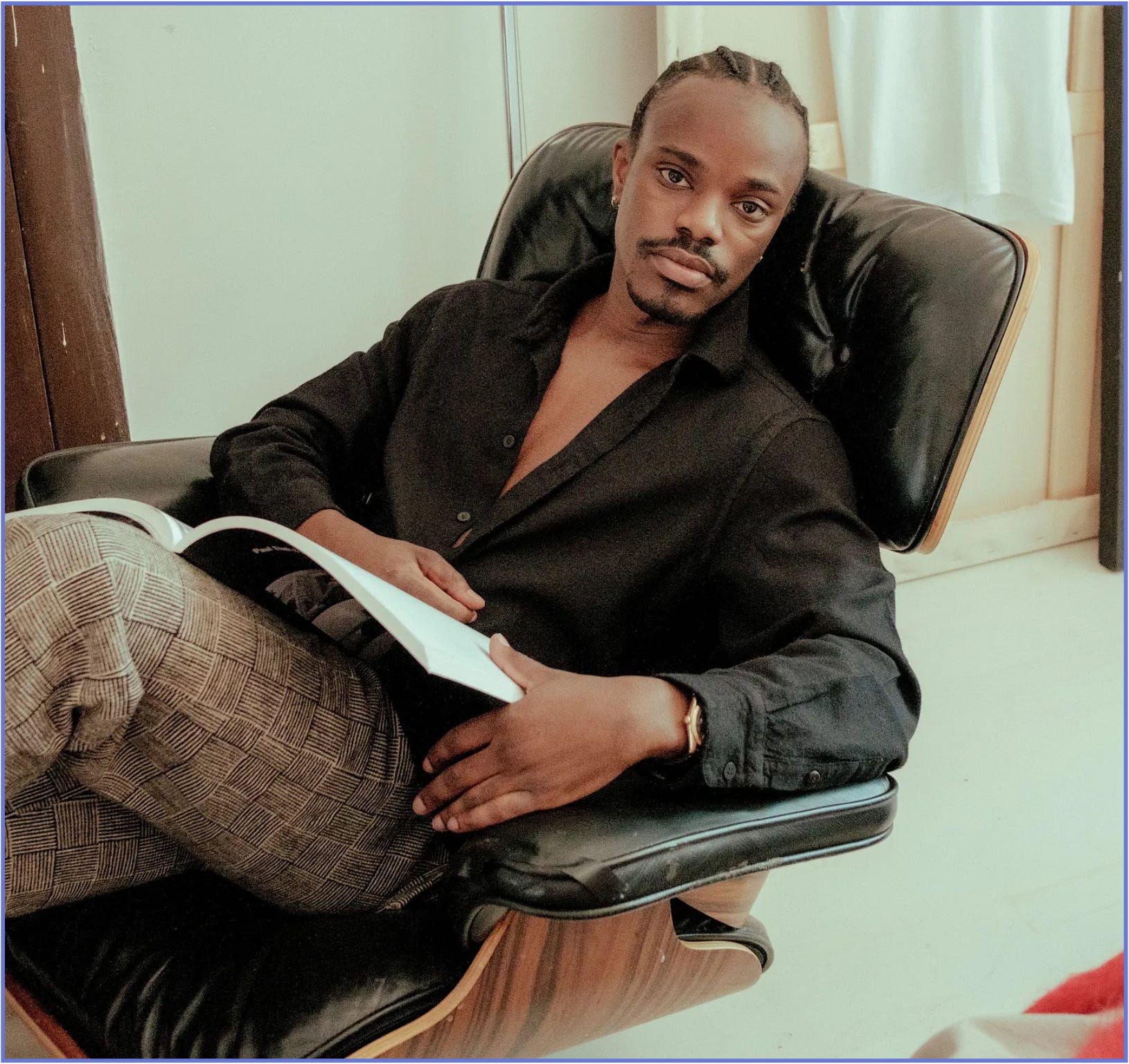
Ruby Justice Thelot: I’m a cyberethnographer which means that I study the digital lives of people and digital subcultures. I’m a designer by trade and I teach Design and Media Theory at New York University.
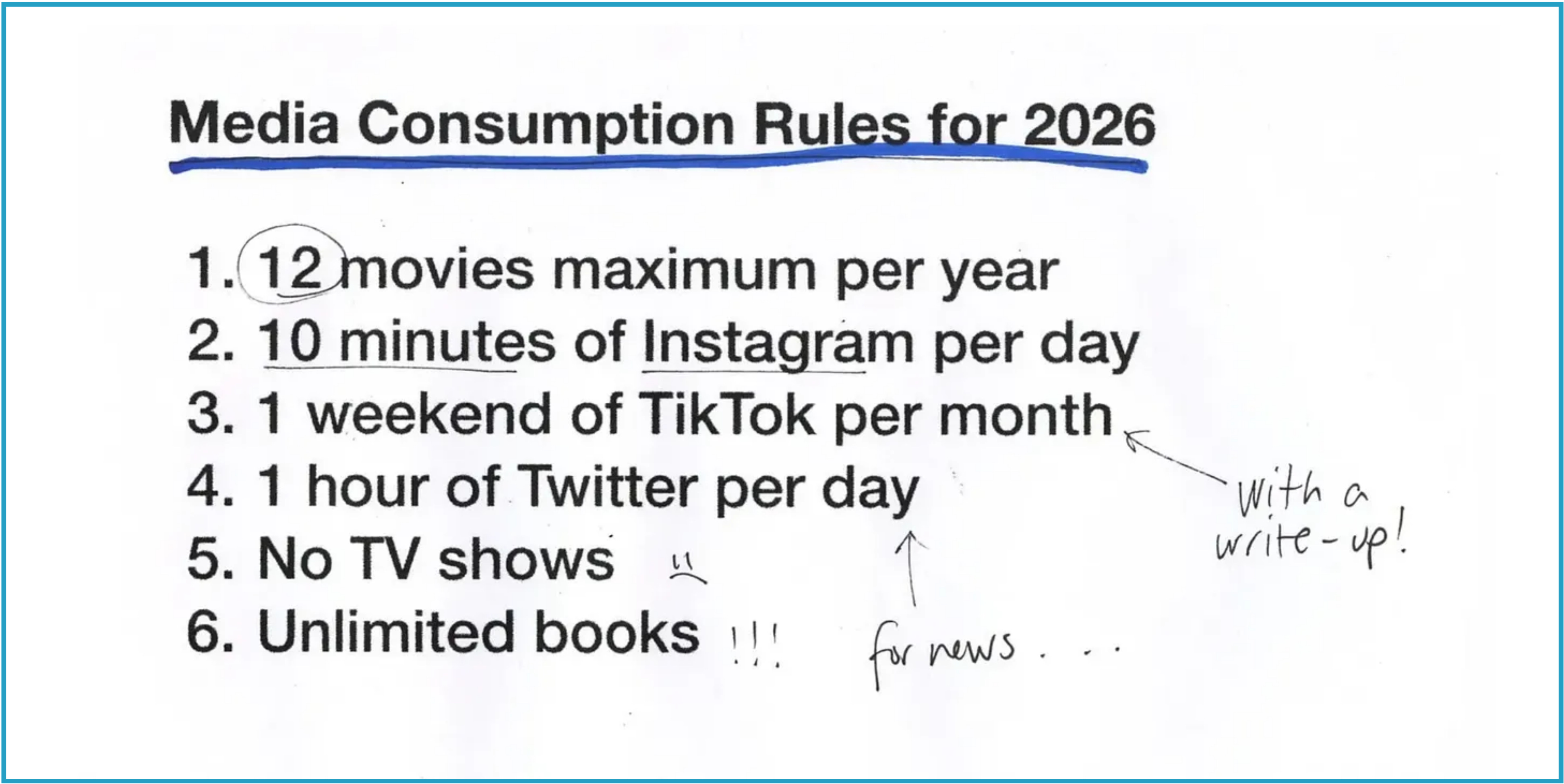
Rachel: I loved your media consumption rules for 2025. They were, “12 movies maximum per year. 10 minutes of Instagram per day. 1 hour of Twitter and TikTok per day but it MUST be followed by 15 minutes of writing down in the notes app or a notebook your favorite insights or things that piqued your curiosity. No TV shows. Unlimited books.” Did they change at all for 2026?
Ruby: I had to alter the TikTok rules, in spite of it being quite informational, I found myself falling into doomscrolls and going back to the app, time after time when bored...
Instead now I get TikTok one weekend per month. I catch up on the latest happenings, see the latest jokes, but the scrolling is contained to that specific weekend. For next year, I may allow TV for sports, I suffered socially from not being able to watch the Knicks or the World Cup.
Rachel: How would you describe the era of social media that we’re in right now?
Ruby: Social media is purely media now. It is closer to classic mass entertainment like TV. Reels are similar to shows with sketches and formats and recurring characters and crossover episodes. For the record, I don’t think that it’s a bad thing, I just think it’s different.
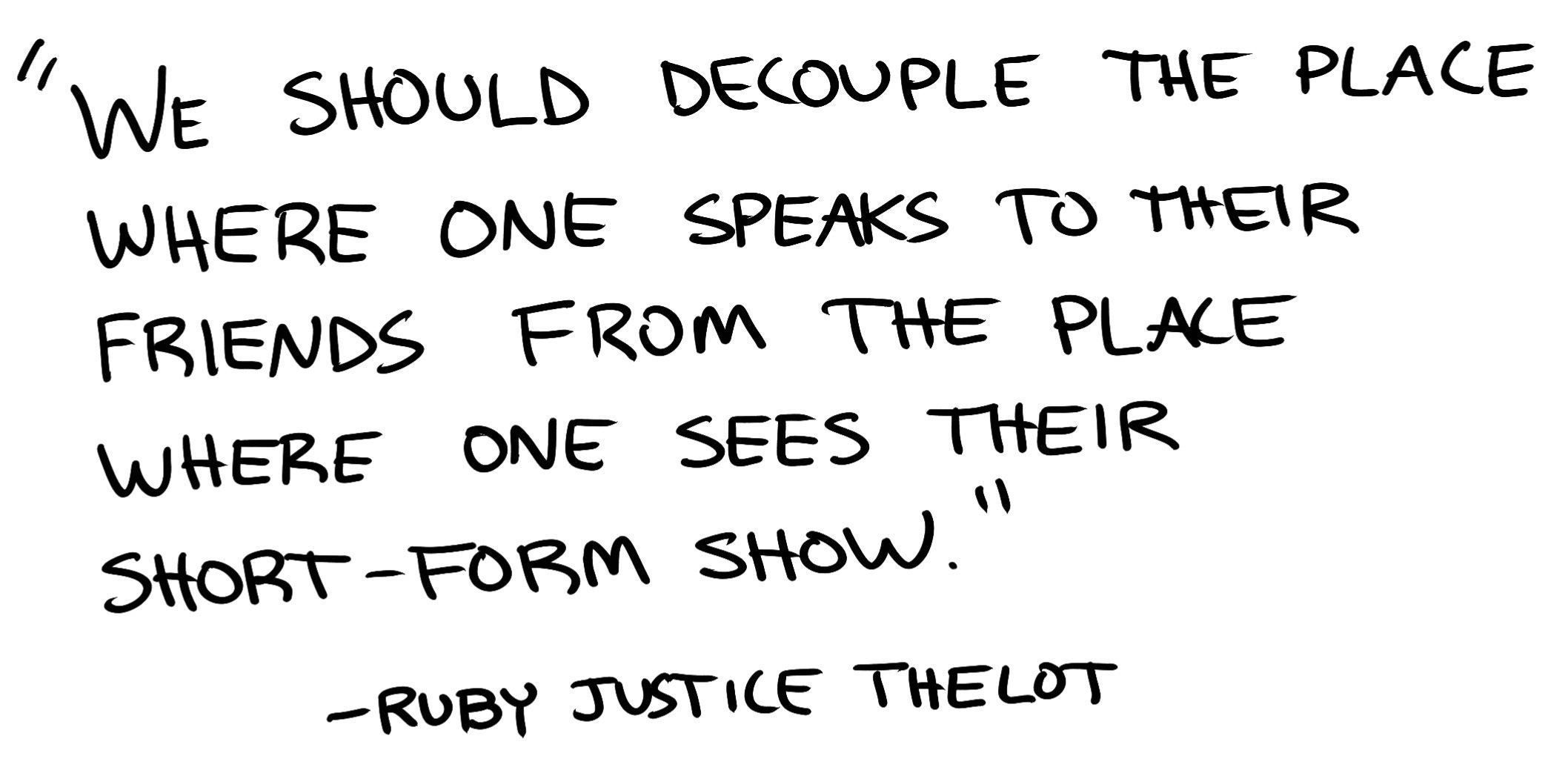
I also think that given this new function, we need to acknowledge that we should decouple the place where one speaks to their friends from the place where one sees their short-form show. That should be migrated to an alternative platform or other modes of communication. Our user experiences are worse when we commingle entertainment and communication.
Rachel: This newsletter focuses specifically on how brands show up online. Many subscribers post online for a living. We also appreciate hard truths. How does the average consumer perceive brands on social media today?
Ruby: Depends which consumer. I think there are generational differences in how people relate to brands and social media in general. As a Gen-Z, I don’t like when brands try too hard, it’s giving hello-fellow-kids. I don’t want memes, just tell me why I should buy these shoes, lol. Or do something cool that grabs my attention. Artistry in that sense matters a lot. A lot more than being #funny or #relatable.
Rachel: I’m curious what you think of online trends. They’ve really been supercharged by the TikTok algorithm. It’s especially prevalent on brand accounts. The same meme or audio, over and over again. Is that a good way for a brand to stand out?
Ruby: It’s a good way for a brand to ride an algorithmic wave, which is something it may want to do. It’s important for brand leaders and marketers to be clear-eyed about their intentions in choosing to hop on a trend. It’s ok to want to be a part of the conversation, it generates temporary views and draws attention, but it will not lead to a meaningful connection with an audience, unless the trend is very niche or specific. In which case, a subculture may feel seen. The science is however not favorable to brand hopping on trends: this study found that use of internet slang in persuasive advertising had a negative impact on brand and product evaluation.
Rachel: A lot of people who work in social media think in a very algorithm-first way. What will perform well instead of I want to make this thing. Is that mindset necessary? Can you get out of it?
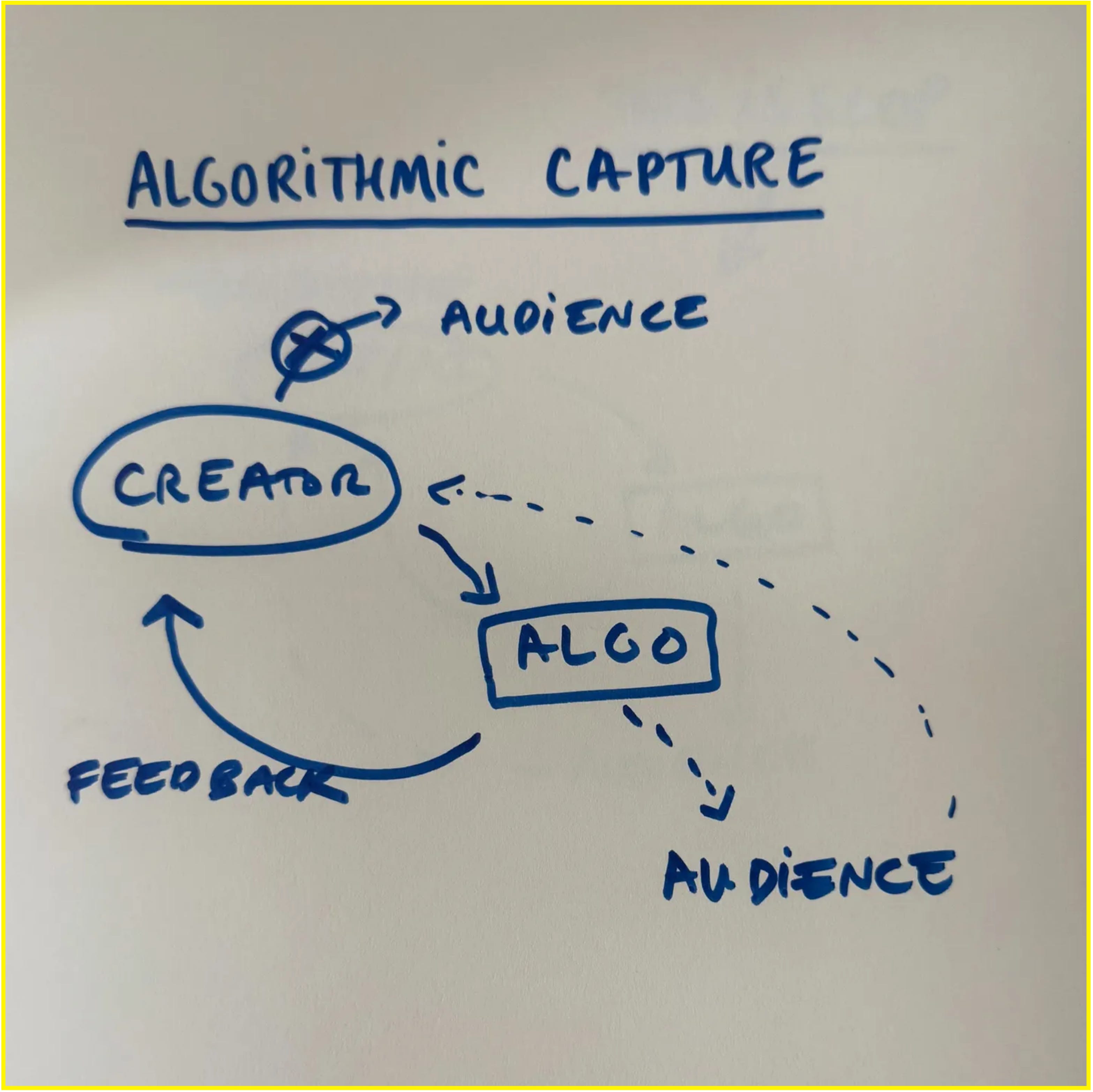
Ruby: The way to break free from audience capture and algorithmic capture is to become a bit of a contrarian. I spent time in 2018-2021 studying a group of artists in a niche Facebook group who were making macros. One of the proudest things you could do as a poster/artist was to make a post so obscure, so sibylline, so arcane that it gets no likes.
In a sense, marketers (if it fits their brand) should embrace the elitism of not being understood. Personally, I have many great posts that are criminally under-appreciated. I embrace their failure on social media as a mark of my own arcaness. What can I say, in the words of Coriolanus, I will be thus to them.
Rachel: I spend more time than I’d like to admit on Twitter, which means I have been deep in the taste discourse this year. You’ve been writing about this topic for a long time. Why do you think this conversation is bubbling up right now?
Ruby: I sure have. Even wrote a book about it!
The question of taste emerged in the 17th century at a time where people needed guidance as to how to consume properly. In 1688, the Bill of Rights is signed in England after the Glorious Revolution, and the nobility’s powers are restrained. And as they lose political power, they also lose cultural power. Simultaneously, you have the emergence of the British colonies with immense amounts of wealth being generated in the United Kingdom. Suddenly you have this nouvelle bourgeoisie, a new elite that emerges. There’s a belief, at the time, that the advent of excessive luxury would will lead to the decay of society. There’s even John Sekora writes in Luxury (1977) that the excess would lead to effeminacy, it is in the vacuum, in the reduction of the cultural power of the previous nobility, that the question of taste emerges.
What’s interesting to me is that we’re in a similar position now. We’re entering a similar industrial revolution. We are in the midst of immense amounts wealth being created, and we’re asking ourselves, How do we consume virtuously? And that is why the question of taste is emerging.
As I write in my book, “Our situation resembles that of 18th century England. At the eve of a new Industrial Revolution, inundated by foreign products, lacking the central authority of an Elite to dictate and inspire mimesis, we are left wandering in endless store aisles and webpages, wondering how to properly consume.”
Rachel: How do you define taste?
Ruby: Taste, as we currently define it, to me is the faculty of “properly discerning the relative value of cultural goods” or “aesthetic discrimination”. Fun fact, it had its literal meaning of sensory taste, as in flavor etc, until roughly 1597 when Francis Bacon expanded its meaning. A cool read is “What Books Taste Like” from 2021!
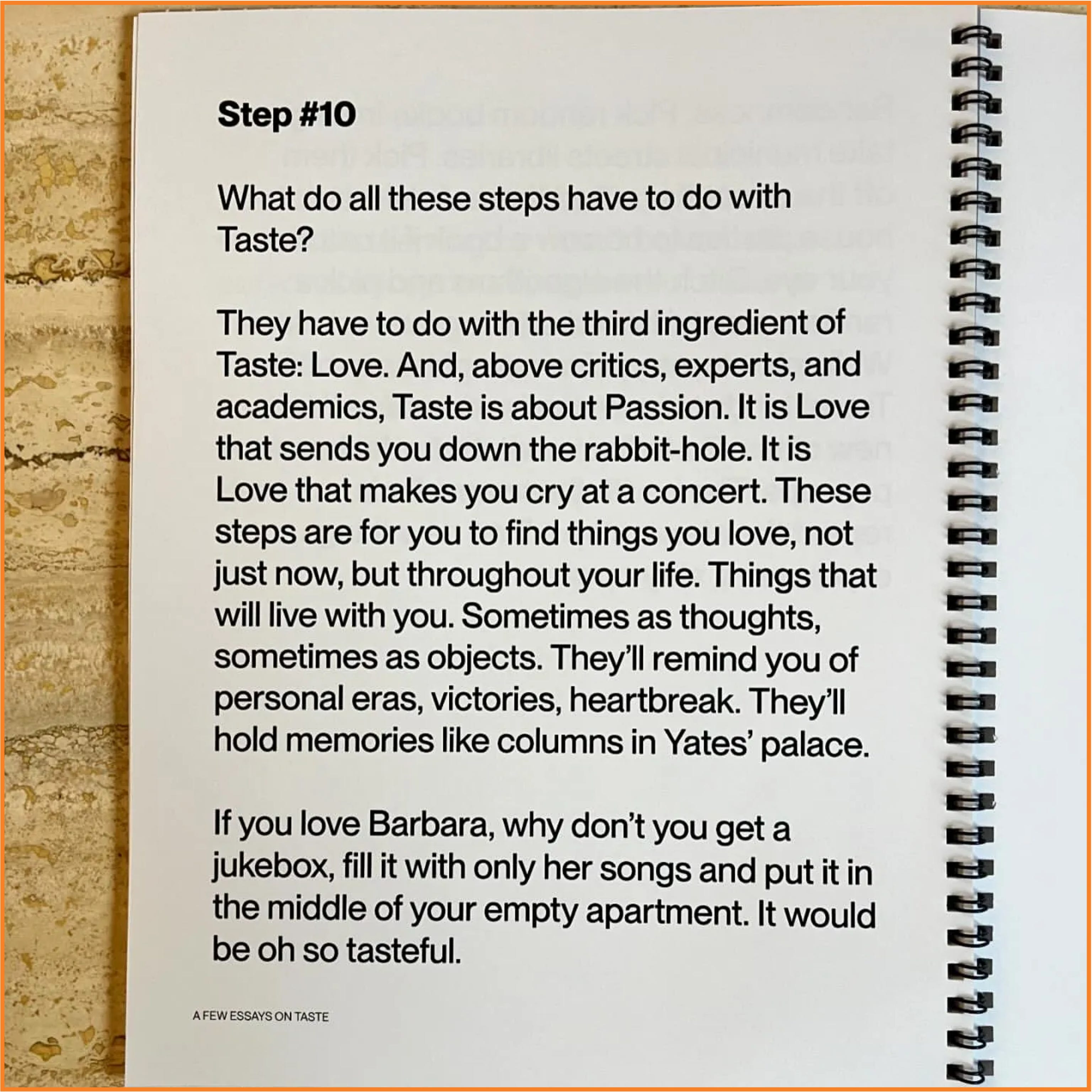
Rachel: Can a brand have taste?
Ruby: A brand can have an aesthetic but taste ultimately is a social activity. Brands confer relative value to cultural goods. Tastemakers confirm that relative value. Now, as brands become more tied to individuals and influencers, you could say that a CEO or a founder or a creative director has taste. Brunello Cucinelli or Rick Owens as people have tremendous taste, in my opinion.
Rachel: At the same time, we’re seeing tech companies really investing in storytelling and “narrative” roles. To me, they mostly sound like marketing roles with new titles. Am I wrong?
Ruby: They’re marketing roles, haha. People love to reinvent the wheel. The work I do for tech brands often falls into storytelling and “narrative” but mostly it’s about developing a way to present the brand and its products to an audience, which roughly is marketing.
Rachel: I’ve been writing a lot about how AI-generated imagery and video is impacting the way people scroll. There’s a lot more skepticism. I see comments on videos that aren’t made with AI saying “boo AI”. How are you noticing AI change people’s relationships with social media?
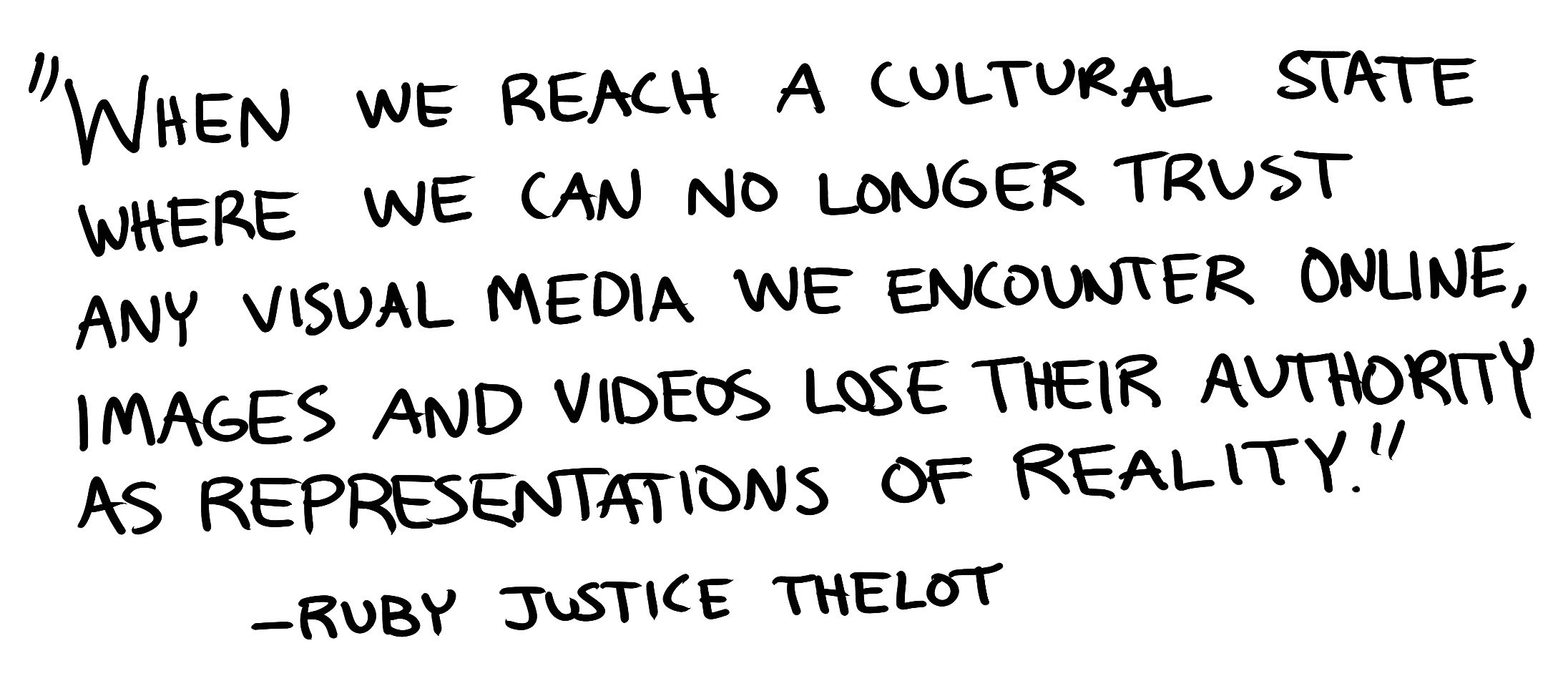
Ruby: It’s altering it quite radically. Social media was a place to be social with other people and the slow invasion of AI accounts, AI content, and AI comments are rupturing that contract. In my new book, In Defense of Being-On-Line, I have an essay called Everything is Default Fake. When we reach a cultural state where we can no longer trust any visual media we encounter online, images and videos lose their authority as representations of reality. Their ascribed fidelity decreases and older modes like hearsay, second-hand accounts become more valuable because they are attached to an individual. I say that we enter a zone of HYPER-LOCAL / GLOBAL SKEPTICISM. We return to more tribal ways of sharing and accessing knowledge.
Rachel: Some argue that the proliferation of bots, generative AI, and algorithm hackers will drive people to be more offline. Do you see it that way?
Ruby: Not exactly. I think what Substack is doing is clever. (They recently added an AI-text analyzer so users can see if the essay or post was made using AI—it showcases the platform’s commitment to human writing). We’re going to see platforms stake their claim to “human-content.” We’re seeing “AI” labels pop-up near AI-generated content as a warning but more broadly, I think it will become the “culture” of the platform to be more AI-forward or more human-forward.
Rachel: Finally, do you have any tips or advice for lowering your screen time? Asking for me!
Ruby: I just use screen time. My team worked on a report called “Paratechnology” which we presented at Betaworks, a VC fund in New York. Para-technology is technology that prevents direct interaction with another primary technology, usually the smartphone or an app. Think Screen Time, Opal, Do Not Disturb, Brick, Yondr pouches, etc. The growing demand for paratechnological tools reflects a true and rapidly expanding need for ways to keep us off our phones. The future of positive tech is one that is convivial (to use the Ivan Illich term), one that does not engender addiction or habituation, but one that empowers its users.
I also don’t have a TV, that helps. :)
What I’m scrolling
Meta to pay up to $17.1B in landmark settlement over social media addiction claims. As part of the settlement, Meta said it would change how teenagers use Instagram and Facebook. They are introducing time limits, disabled “like” counts, the ability to turn off an algorithmic feed, and more. Meta is also requesting that TikTok and YouTube implement similar changes. I wouldn’t be surprised if adults started demanding these features too.
Digital ads are flooded with ‘synthetic’ AI models. How one state is calling them out. Peolpe are submitting anonymous complaints to the New York attorney general’s office about brands not disclosing the use of AI-generated people in ads.
This post from Meredith Dairy convinced me to immediately go buy a jar of their marinated cheese. Social media works!
If you keep accidentally DMing people on TikTok, read this.
Sick of AI slop? So are tech giants. “Across the internet, tech companies are undertaking a generative waste detox, overwhelmed in many cases by the same slop first made possible by their own A.I. tools.”
Check out the Link in Bio Job Board
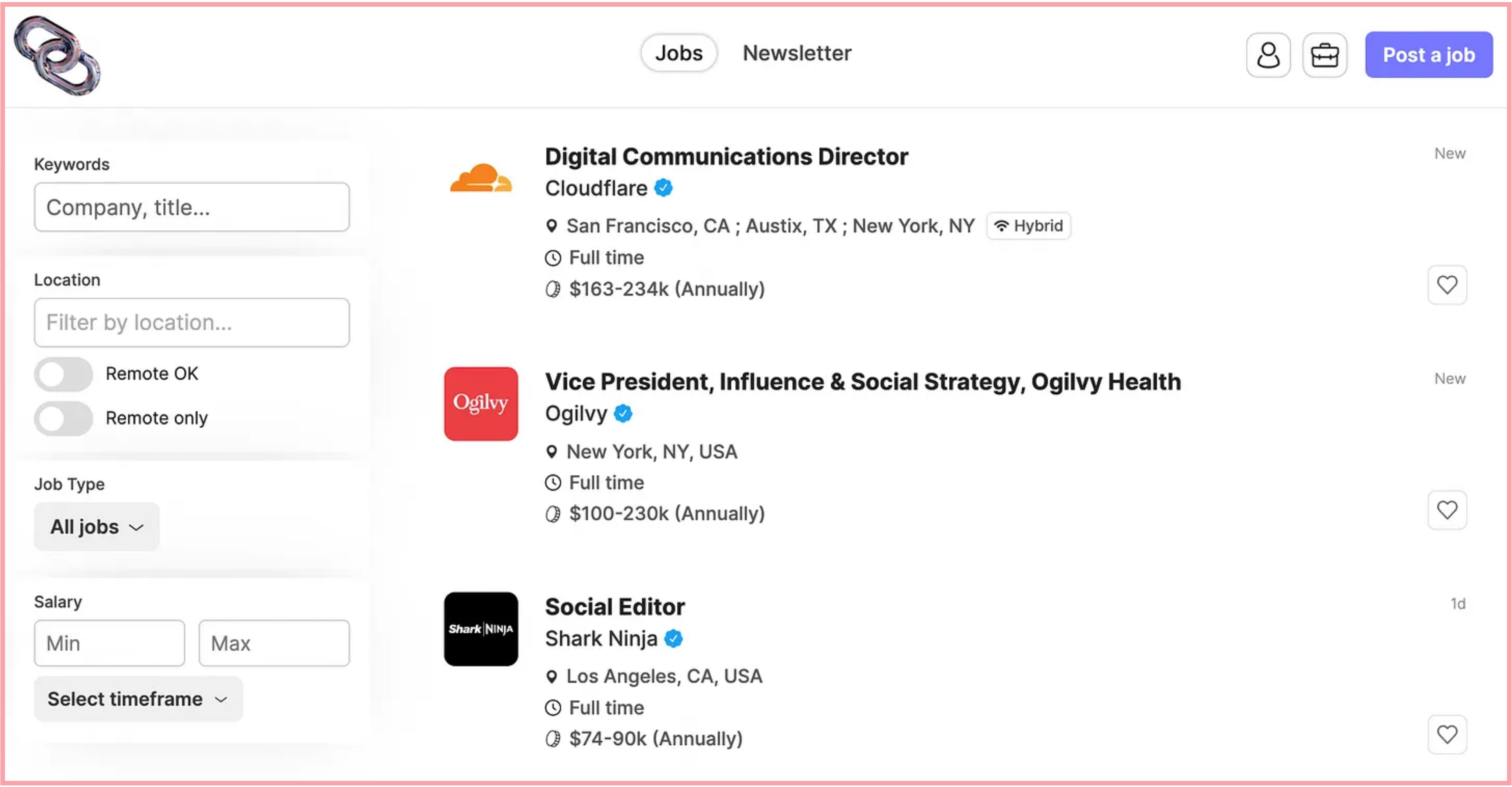
The Link in Bio Job Board features all of the best social media roles in one place, updated daily. Right now there are roles from places like MLB, The New Yorker, David Zwirner, and more.
If you work for a brand that’s hiring within social media, this job board is for you too. Post your job listings to get in front of talented social media marketers.
Thanks so much for reading. If you enjoy free interviews like this one, you can upgrade to a paid Link in Bio subscription. You’ll get weekly strategy newsletters and quarterly trend reports, along with access to the Discord community.
I want to note that this newsletter is an educational resource and can likely be expensed through your company. I have even written a handy template for you to use when asking!
If you’re already a paid subscriber, thank you for making Link in Bio possible!
As an oversimplification, if brands spent the same amount of time on content but posted less often and invested in more thoughtful posts 1) the internet would be a better place 2) it would improve brand preference bc the content would (hopefully) be better
This really got me thinking! Will need to listen to the podcast tmr after work. I’ve been thinking a lot recently on how we have to be disciplined in balancing our media consumption with creation. I think that it gets easier the more you create but in order to create you must consume. And vice versa. I also don’t think I can keep myself to the media consumption rules lol (I go through 12 movies in a month). I understand that quietness is good for creating but in a world that keeps turning at an exponential pace there’s a sense that you have to keep up. Tbh with content creation and the creator economy right now we might get to a point where that bubble may burst. There’s so much output from every brand, media enterprise, and people with platforms etc, there is need for some filtration or dispersement. Budgets (esp from brands bc that’s where the money is now from) can’t really keep up at this scale. Also I feel like it’s an ongoing discussion on how we curate taste but I find myself naturally attracted to things online that have effort or come from a pov that’s not really something I can pinpoint but I can tell. I feel like it’s no more “being the first to do something” but carving out something for yourself where niche and taste intersect.