


Good morning! Did you hear that Kareem Rahma’s show “Subway Takes” is nominated for an Emmy? Amazing. What a fun time to be posting on the internet.
Today Link in Bio contributor Matthew Stasoff is taking over the newsletter. He is the Group Director, Social Strategy and Creative at Anomaly and has spent the past 10+ years shaping how global brands show up online. He also writes my favorite annual strategy deck Social Signals.
Below Matthew dives deep into the current state of community management. He wonders if brands have over-invested in their outbound commenting strategies, and proposes moving from a “banter” approach to a “hero” approach. I have a feeling many of you will be bookmarking his community management matrix. Let’s get into it.

The comment section. A place that once felt like the cool place to hangout, now feels more like a high school party the parents keep crashing. Why? Brands, of course. With the constant tension of trying to get attention, brands have made a space for the people just another spot to sell. (I am guilty of it too.) And when you multiply that by the dozens of brands who want to jump into the same conversation you can see how the whole thing gets out of hand. It wasn’t always this way and, I’d say for brands looking to stand out, it’s time to go back to the basics.
How did we get here?
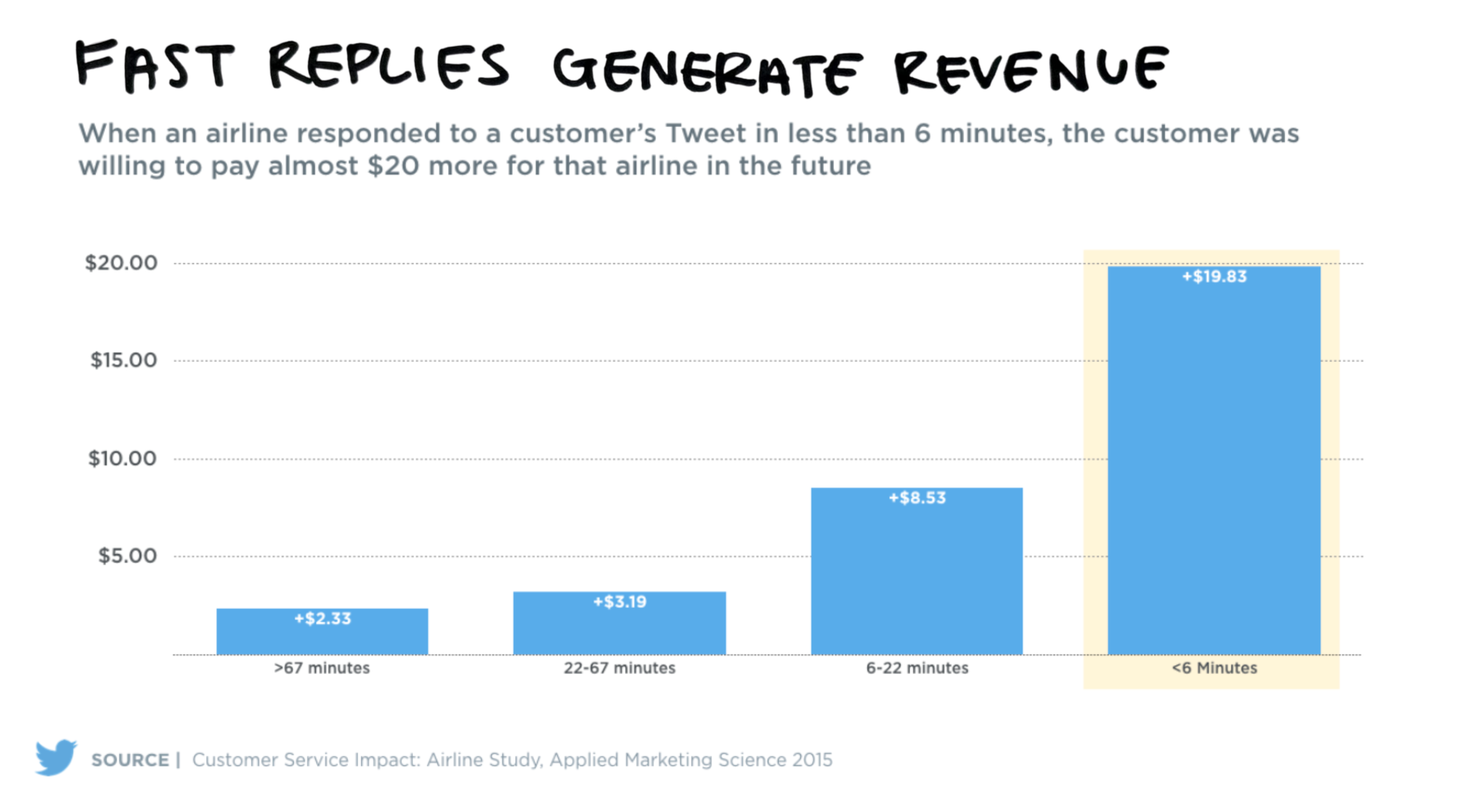
In the early days of social media management the key to success for community management was speed of service. People have problems. How quickly can you solve them? And this wasn’t just for show. There were cases to back up speed of service like this one from Twitter in 2015. People were shown to literally pay more for an airline that helped them in under six minutes.
As social media customer service rose in popularity, scale was required. This led to brands outsourcing these interactions and having them live outside of the day-to-day scope of the community manager.
The role of community management today
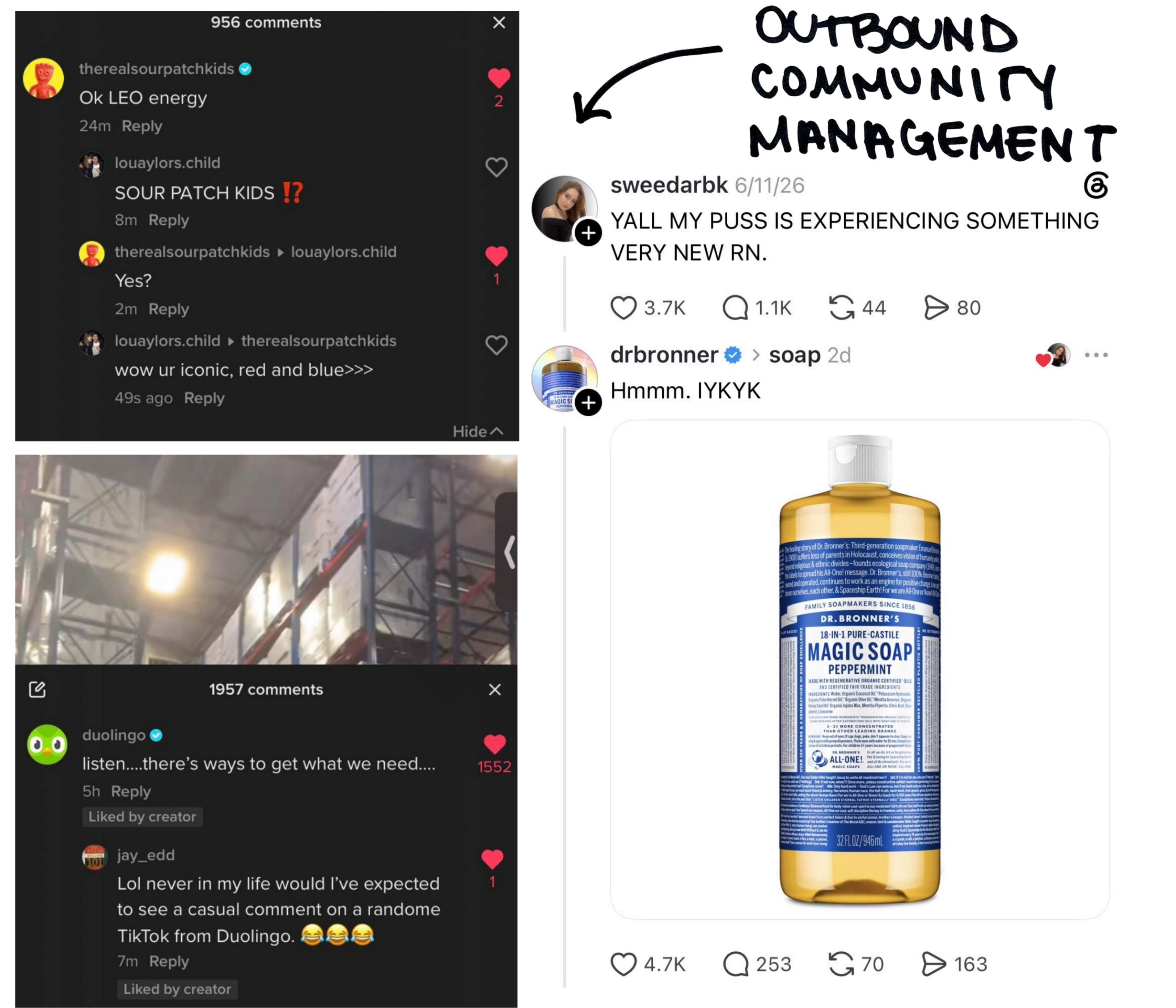
Today the role, and the space in general, has evolved. Community managers face new responsibilities such as “outbound commenting”—that act of a brand inserting itself into the comments of content not directly connected to the brand.
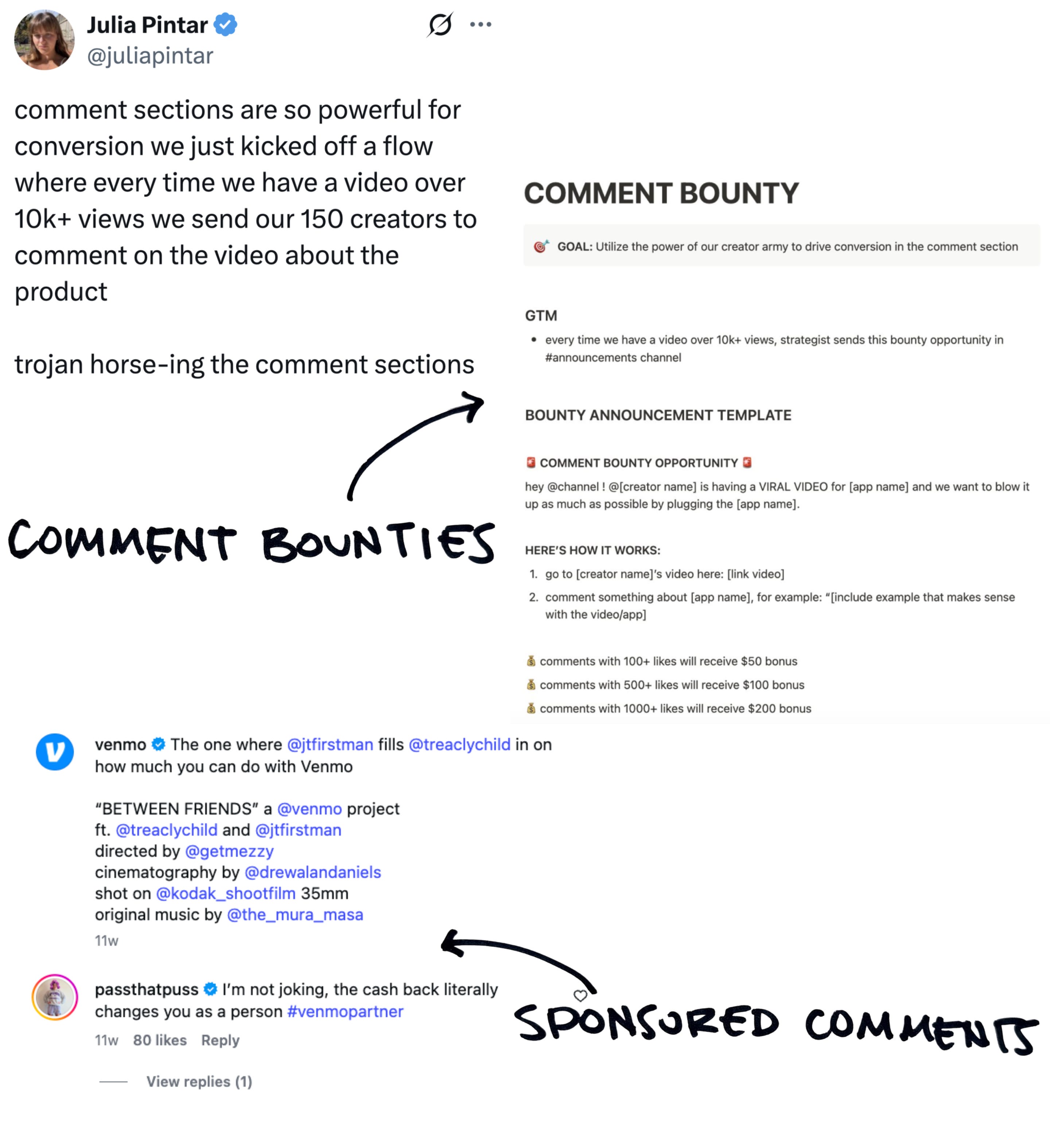
A post-AI world has also led to new techniques as brands try to up their social search optimization (SSO), like comment bounties and sponsored comments.
The reaction
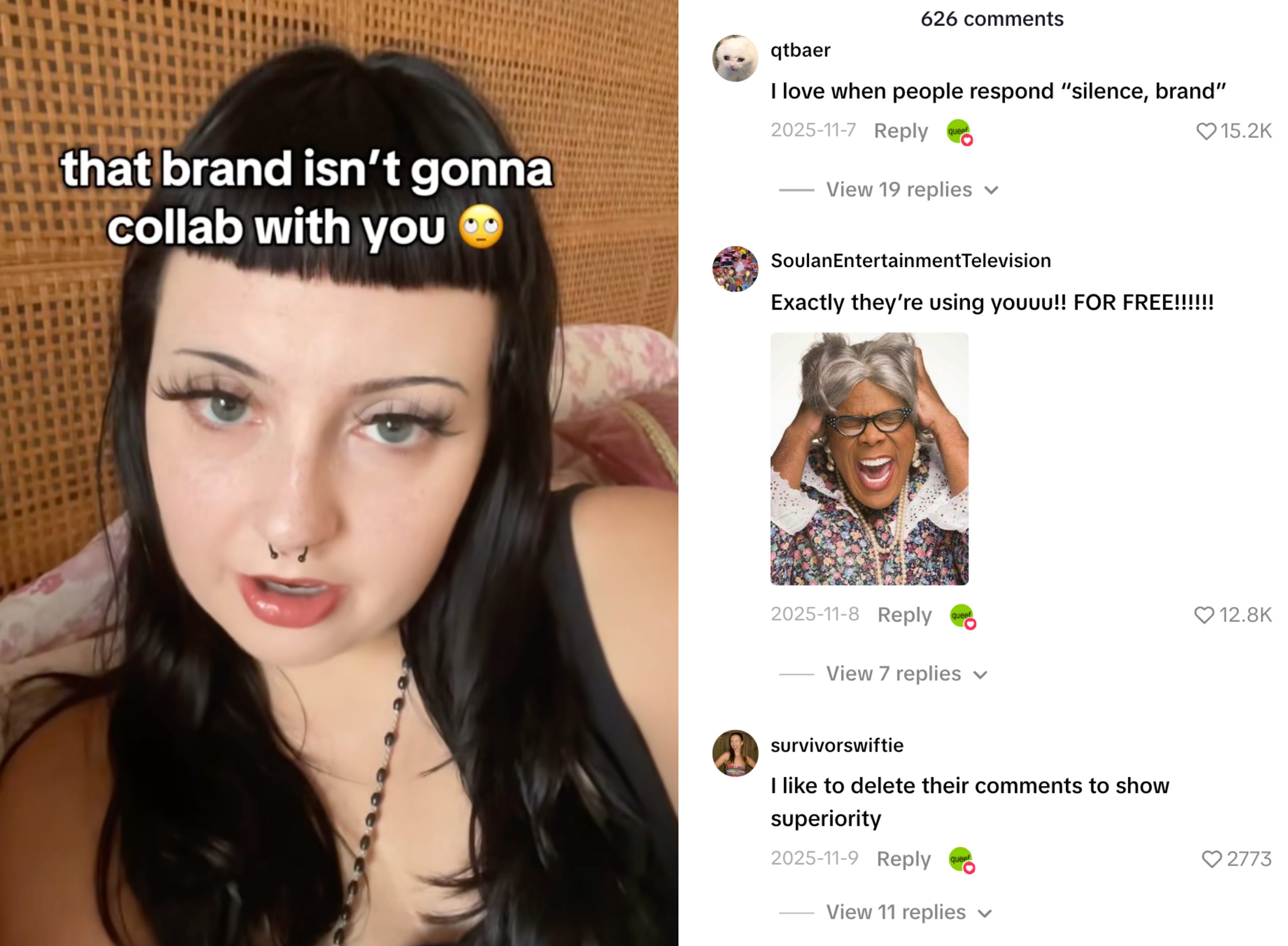
It can be tough to decode whether the consumer sentiment of the above strategy is positive or negative. On the one hand, these outbound comments continue to rack up likes and engagement. On the other hand, there’s a growing skepticism bubbling up.
In this video from user @queefqueef_, they say, “Walmart isn’t commenting ‘get that bag sis’ to collaborate with you or send you free stuff. They’re commenting for free advertising, and anytime you as a creator engage with their content, you’re giving them an even bigger platform.” Videos like this and this highlight just how aware people have become of this strategy.
Why do I think this matters? Well last year Forrester’s 2025 Customer Experience Index (CX Index™) revealed that US customer experience quality dropped for the fourth consecutive year, hitting an all-time low average of 68.3 out of 100. Combine that with everything else we know about price sensitivity and the general feeling that products are getting worse, you begin to realize customer service can become the big brand advantage. And to take it a step further, I think there’s a way for brands to turn service into entertainment.
Brand banter → Brand hero
Before looking at where we should go I wanted to lay out the four main areas of modern community management, covering everything from customer service to community building. I’d love brands to look at this and ask themselves: What takes up the most of our time? What costs the most? What benefits our customers and the brand?
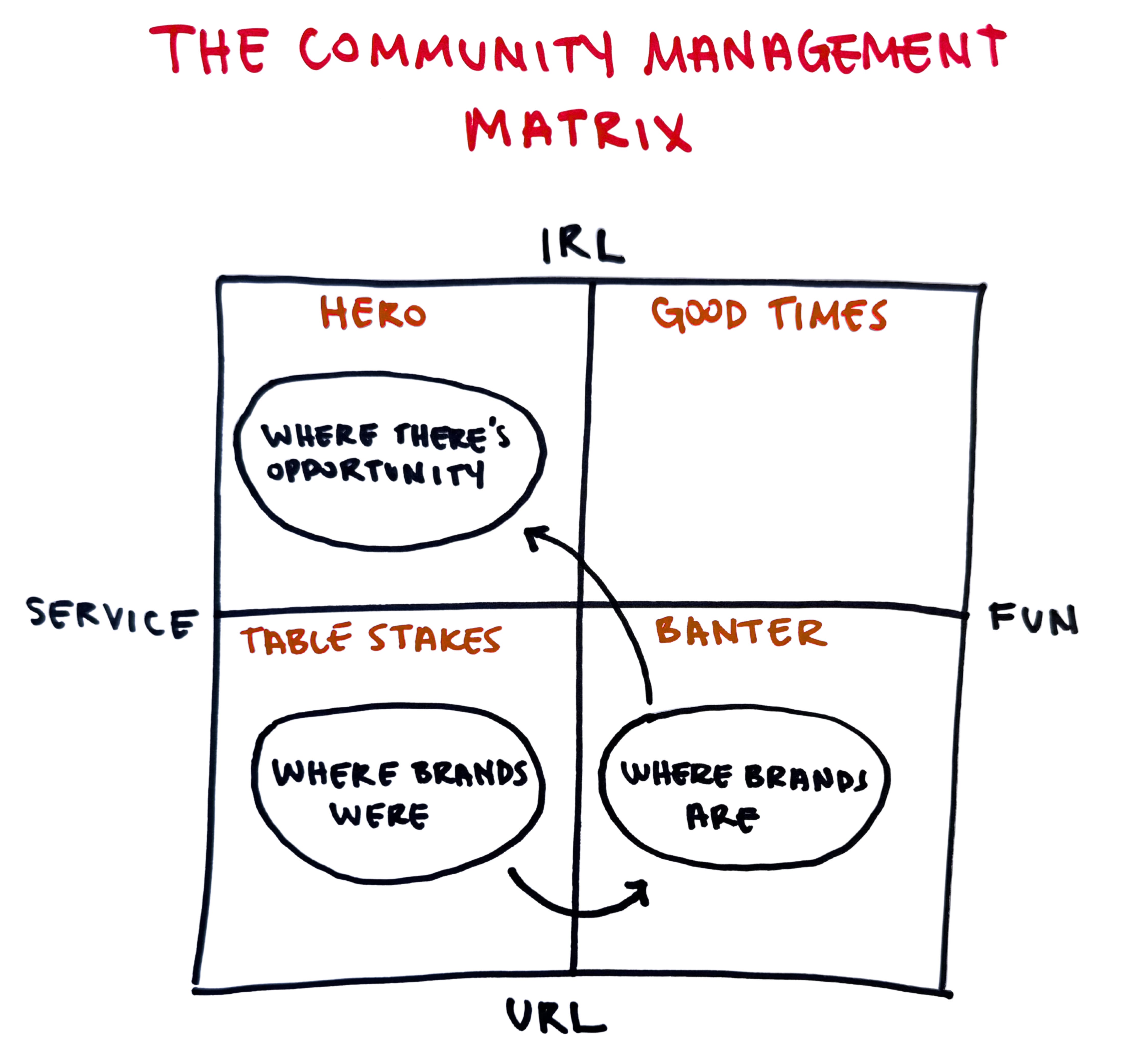
Table Stakes = Service with a capital S. Your customers have issues, you’re there to solve them. Everyone knows, keeping an existing customer is significantly cheaper and easier than acquiring a new one. We can’t let this style of community management fall by the wayside in pursuit of entertaining comments.
Example: United has been doing this on Twitter and in DMs for ages.
Banter = Outbound comments. Leaving your owned channels and inserting yourself into conversations that are, for the most part, completely unrelated to your brand.
Example: As mentioned, there is clearly an audience who loves banter when it’s done right (unless there’s a secret SMM group with thousands of members just keeping this comment scheme going 👀). For me doing it right means “creating discussions…and building community with [your] most dedicated fans” as Oatly previously mentioned in their interview with Link in Bio.
Good Times = Surprise and delight moments. This is less about service, and more about inserting your brand into a viral moment. It’s not an existing customer but still exemplifies your brand going above and beyond for someone.
Example: P.F. Chang’s “Cake Delivery” in 2025. 100% unrelated to the brand, but after an outbound comment blew up, the chain went the extra mile to literally deliver cakes to a couple of friends who got in over their heads. I’d argue this is more of a content strategy than a community management strategy.
Hero = Acts with an emphasis on service. These are specifically targeted at actual customers and communicate to the recipient and audiences that the brand will go above and beyond. This is your brand taking customer service from URL to IRL.
Example: The famous North Face Jacket Delivery from 2023. When an unhappy customer posted about their jacket, the brand didn’t just promise to replace it…they had an employee fly it to her in a helicopter. Here are more hero examples from United, Sephora, and Top Golf.
It’s at this point that I want to make clear. A lot of brands are looking for opportunities to get their products into the hands of people with large followings that post about them. This is not what I’m suggesting. Looking to maximize eyes on your product is different from genuinely looking to help an existing customer, despite their following. I actually think brands will serve themselves better by trying to go above and beyond for the everyday customer than another influencer. One hero moment is worth 50 banter moments.
How to implement a brand hero process
Identifying these moments are easy, but how do you create the workflows to deliver on being the hero? For that, I like to put in place three steps:

Vision asks “What do we want to be known for?” It’s not just about excellent service, but identifying moments that connect back to how your brand shows up online. When talking about their helicopter delivery experience, The North Face said “We see our community managers as the digital version of our store guides; helping our customers have a great experience in the outdoors is always our priority.” Can you think of any past moments where your brand could have gone the extra mile to be a brand hero? What would you have done differently?
Process asks “How do we get from idea to execution?” After the famous Stanley Mug fire incident the brand’s President Terence Reilly was asked why most organizations couldn’t respond the way Stanley did within 24 hours. He noted that while it was easy for him to get around red tape as the President, it was an important lesson to all leaders. Which is to say, create a process that minimizes the space between the Community Manager and the person who can say yes.
Permission asks “How are people empowered?” For this I always go back to the Ritz-Carlton’s “Golden Rule” culture. The $2,000 rule at The Ritz-Carlton is a legendary customer service policy that authorizes every single employee, from housekeeping to the front desk, to spend up to $2,000 per guest, per incident, to resolve an issue or create a memorable experience, all without needing managerial approval. Now you may not have $2,000 at your disposal for EVERY customer, but what if you set aside a budget and put it directly into creating those hero moments?
Why it matters
Last year’s 2025 National Customer Rage Study (a real thing) shows customers are feeling an all-time high amount of rage when it comes to customer service. So when it appears a brand cares more about winning in the comments than winning their customers’ loyalty, it’s time for a change.
Brands, people see the lengths you go for influencers. They deserve that treatment too. It doesn’t hurt that in today’s algorithms a customer with 300 followers can get 1M views. So have fun, swing big, and don’t forget helicopter jacket deliveries are only as strong as the scaled customer service that exists behind it.
Thanks so much for reading. If you enjoy free essays like this one, you can upgrade to a paid Link in Bio subscription. You’ll get weekly strategy newsletters and quarterly trend reports, along with access to the Discord community.
If you’re already a paid subscriber, thank you for making this newsletter possible!
I love this and feel like brand hero’s are what great restaurants do all the time. True personalized hospitality will always stand out!
Its kinda baffling how very few brands understand this.