


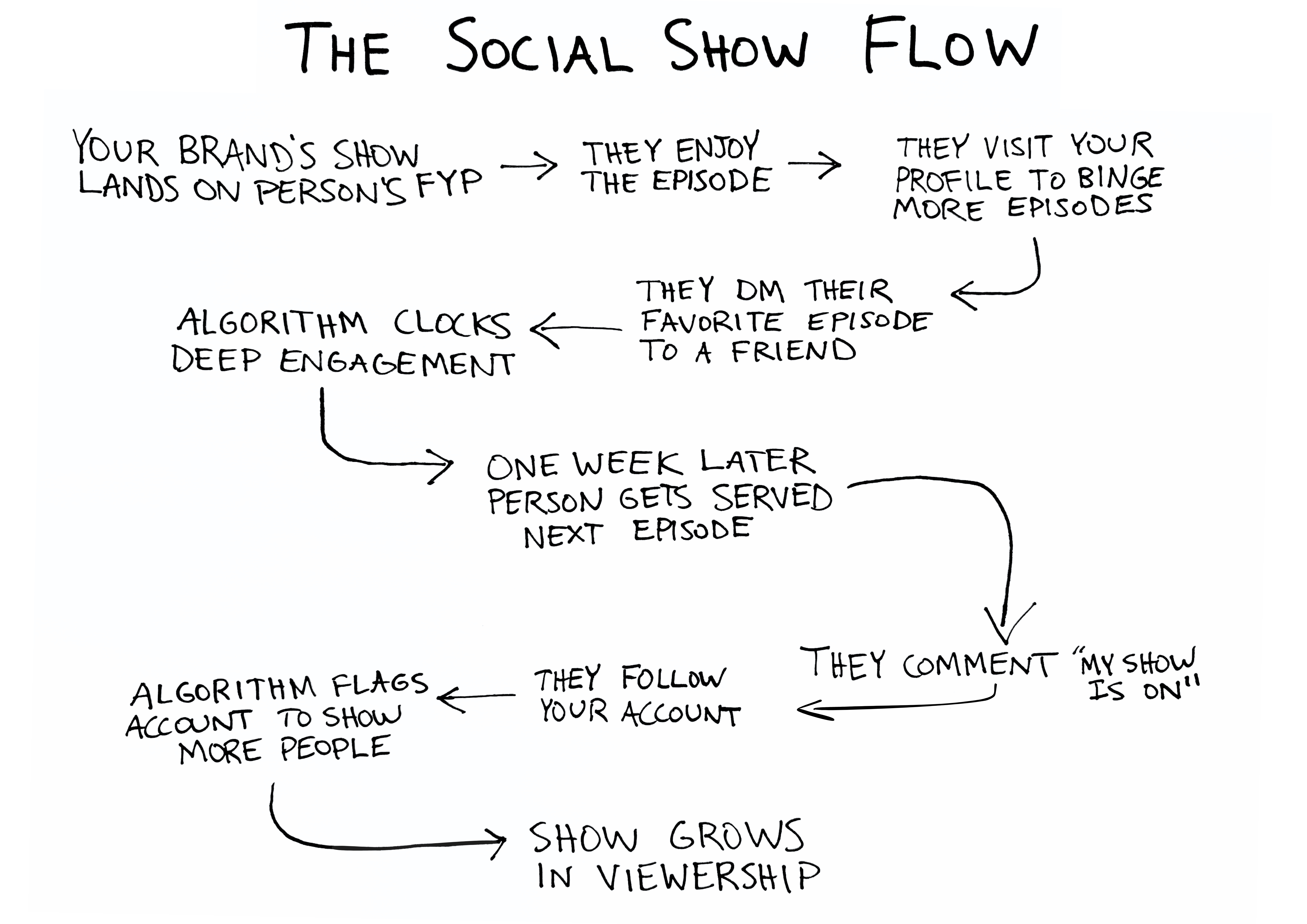
Good morning! It’s been fun to hear from all of the brands that are thinking about creating social shows after reading Tuesday’s newsletter send. What I think is tricky to explain is the idea that a “show” isn’t a trend. It’s a fundamental understanding of how the algorithm matches content to viewers today. I tried to explain it in this chart that went out to paid subscribers.
Right after I sent the newsletter, I came across a post from the creator Bran Flakezz that articulates this point well. He was recapping a meeting he had with a TikTok rep about the algorithm. They told him, “When you have no niche, the platform has no idea who to push your video to.” He said that there is a section in the backend of TikTok that establishes and assigns a “niche” to every creator based off the kind of content they make. When your account doesn’t have a focus, your posts have a “cold start”. The algorithm air traffic control doesn’t have a strong test group to point that video towards. (Even if you have 1.4M followers, like he does.) Accounts that stay within a specific world make it easier for the algorithm to essentially source viewers who are more likely to enjoy and give the video the momentum it needs to reach more people.
For a lot of brands, especially small businesses, it’s worth exploring what a more focused version of your account could look like. How do you create content, consistently over time, that gives the algorithm enough clues to avoid a “cold start”?
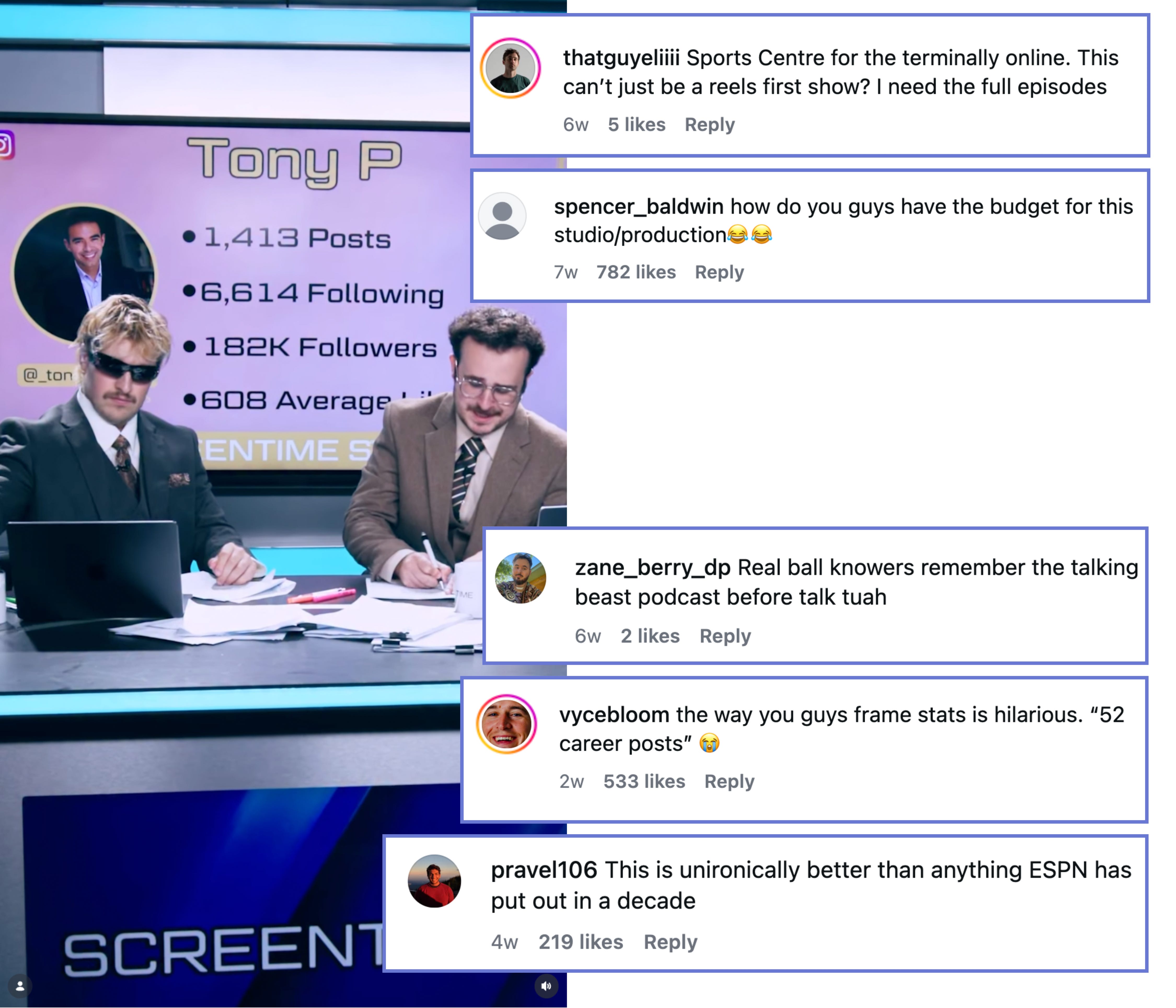
Speaking of focused accounts, today’s interview is with one of my favorite new social shows. ScreenTime is like if your applied the camp and theatrics of SportsCenter to the creator economy. A post analyzing and breaking down A.J. and Big Justice has over 29K likes. It’s hosted by comedians Cam George and Pete Ditzler. You might also recognize them as the hosts of the now-shuttered Talking Talk Tuah podcast, where they hilariously dissected new episodes of Haliey Welch’s Talk Tuah. They approach their subjects with that “high effort, low stakes” energy that works so well on social media right now.
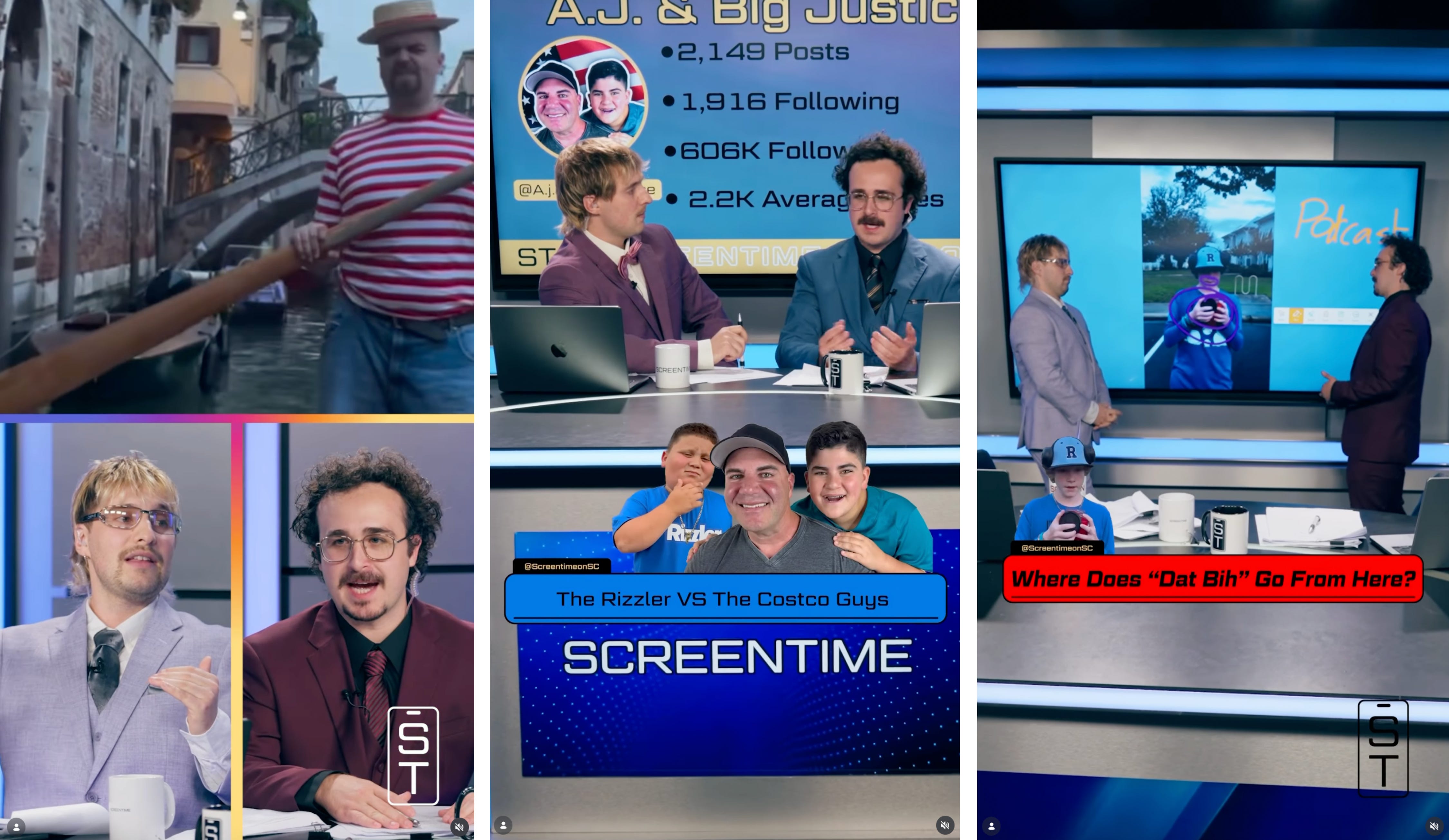
We talk about why their videos are resonating (“it can really activate people when they see two 5’6” guys in 3-piece suits acting as the authority on their favorite creators”), what the production process looks like, and how they plan to work with advertisers.
Rachel Karten: First, why did you pivot from Talking Talk Tuah to ScreenTime?
ScreenTime: While we hold a deep admiration for Haliey Welch and all Podcasters, we never truly felt it was our own calling. We are forever grateful for all of the wisdom we learned from the different hosts we companioned from week to week, but we wanted to play with the format and deliver internet insights in a way that felt novel to us.
There was the better part of a year when we were searching for the next project that really felt right to us, and we stumbled into kismet at a Gelson’s wine bar (imagine the vibe of an airport bar inside a grocery store with a surprisingly OK menu) on one of our brainstorm nights.
The TVs there were broadcasting Inside the NBA, and the frenetic transitions and stat call-ups spliced into heated conversations about players’ capabilities felt like the perfect analogue to content commentary. Similar to sports, content moves at a breakneck pace, and it is impossible to keep up with its dizzying streams of vital numbers, so faithful commentary of it demands more dynamism than a standard podcast set-up.
Rachel: ScrollCenter is a show that you launched on Patreon. ScreenTime is the clips from that show. How did you land on that model?
ScreenTime: We are borrowing the upload strategy of ESPN itself of making full episodes of their shows exclusive to cable or streaming and providing just highlight moments to the more public internet, and it also turns out to be the most sensible posting process in line with our production. On each visit to the studio we rent, we record a full episode of ScreenTime, which consists of 8-10 segments around five minutes each analyzing different creators.
The full episodes end up in the range of 45 minutes, and since we are funding the project ourselves, we wanted to establish a Patreon with exclusive access to the full episodes to draw in people interested in supporting the show. There is also the ambition of eventually expanding the ScrollCenter network to offer other series with different hosts who tackle the internet with their own perspectives.
Rachel: Why do you think the ScreenTime clips are resonating?
ScreenTime: The traditional monoculture may be dead and gone, but many content creators sit within a subliminal, modern entertainment pantheon, and it can really activate people when they see two 5’6” guys in 3-piece suits acting as the authority on their favorite creators.
We are actively working on the best production process for offering even more topical segments, but as we have been primarily setting the context of who our quintessential creators are, the debates have gotten heated between the two of us and with the audiences who have their own informed opinions to share in the comments. It has also been extremely gratifying to see comments from people who recognize us from Talking Talk or even Beast Pod Official and are impressed with the new production.
Rachel: The production value is so good. What does the team look like?
ScreenTime: Thank you! We are still figuring out the best team formation within budget constraints, and we would certainly love to grow enough to pay for additional support. For the first two episodes, we had five friends cut deals on offering their talents and gear, while an employee at the studio provided tech support. For our third episode, only Pete’s girlfriend was available to return and provide assistant directing support, and we paid the studio extra for their in-house camera and audio set-up.
On the post-production side, we handle all of the editing, with Cam designing the bulk of the stat graphics, and Pete specializing in the plug and play of multimedia. We have commissioned a number of talented friends and Cam’s little brother Liam to produce all of the music for the show, as well as a VFX artist for the beautiful motion graphics that keep the show zippy. It is also just us who handle all of the uploading and channel management. We live together, so it is pretty easy to coordinate things via iMessage.
Rachel: Have you worked with any advertisers yet? Are you open to it?
ScreenTime: We are currently in talks with a couple of brands, and while we are open to ad deals to financially sustain the show, we also remain fairly selective to ensure any promotions lend themselves well to the format of the show and are not for predatory products or services. We think the best partner collaborations would come from segment sponsorship (think “POV Power Hour, Presented by Popeyes”) or wardrobe sponsorships. If anyone at Men’s Wearhouse is reading this and interested in working with us, please reach out to us at mattrifeishilarious@gmail.com.
Rachel: Anything else you’d like to share?
ScreenTime: If any of our clips have made you think deeper about the world of content, please consider checking out the full show on Patreon. This is a very ambitious project for us as we juggle other jobs to fund it, and we are trying to keep it as independent as we can. Shout out to our amazing team of friends who make ScreenTime possible!
Check out the Link in Bio Job Board
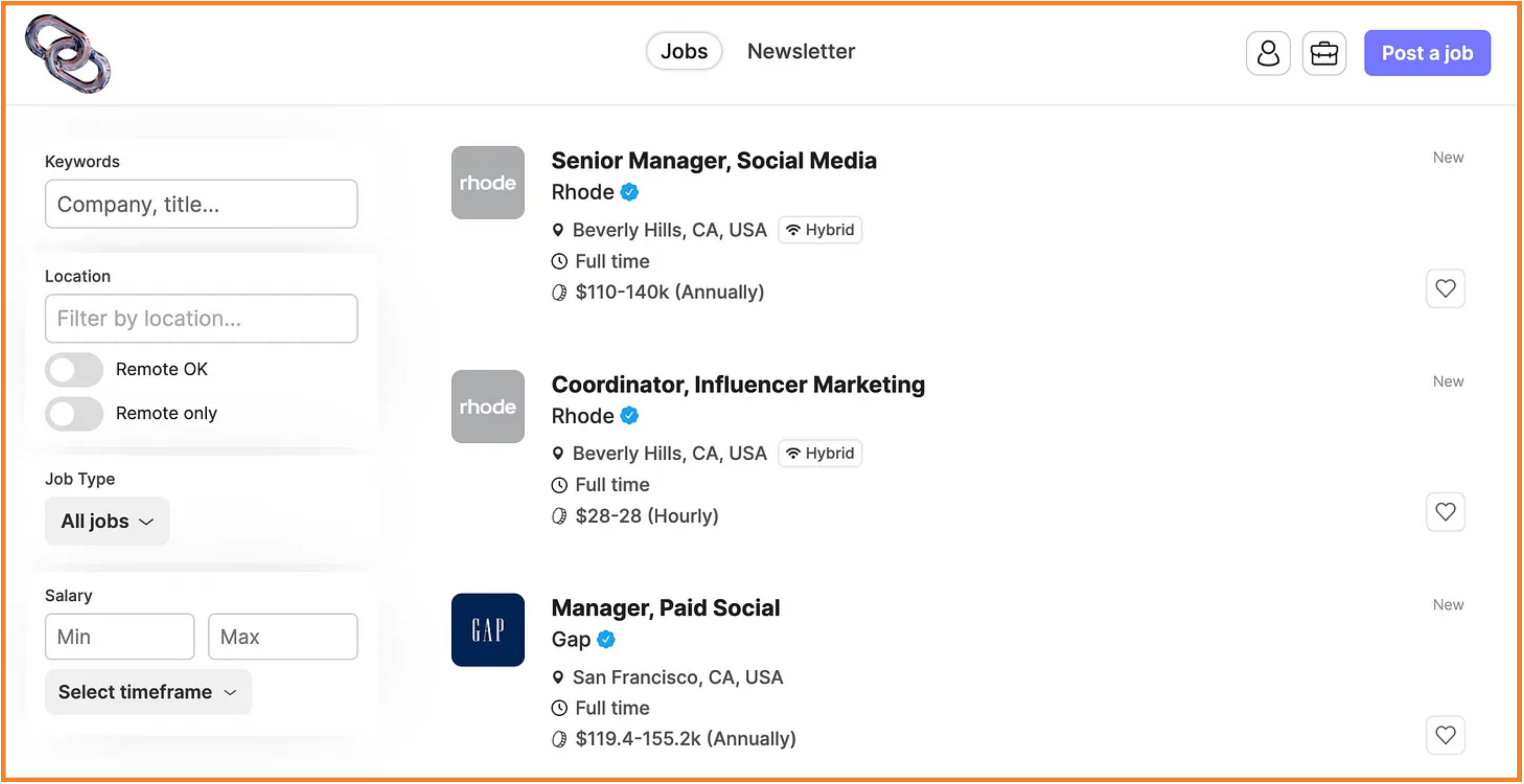
The Link in Bio Job Board features all of the best social media roles in one place, updated daily. Right now there are roles from places like Olipop, Ladder, DÔEN, and more.
If you work for a brand that’s hiring within social media, this job board is for you too. Post your job listings to get in front of talented social media marketers.
Thanks so much for reading. If you enjoy free interviews like this one, you can upgrade to a paid Link in Bio subscription. You’ll get weekly strategy newsletters and quarterly trend reports, along with access to the Discord community.
I want to note that this newsletter is an educational resource and can likely be expensed through your company. I have even written a handy template for you to use when asking!
If you’re already a paid subscriber, thank you for making Link in Bio possible!
Our office is currently obsessed with Screentime so absolutely loving this
ScreenTime has quickly become one of my favorite profiles (+10 that its work related). If they're doing this with a small team, I can't wait to see what's in store for them as they grow!