


If this is your first time receiving one of these reports, welcome! Like I always preface, this isn’t your usual graphs and stats trend report. Think of this like the scribbled notepad version of the trends you’ll eventually end up seeing in six months. It’s like getting early access. A little bit of science and a whole lot of gut.
The Brand Social Trend Report: Q1 2026 covers topics like:
Delayed virality
TikTok’s slow down
Accounts going create mode
“Drop everything” campaigns
Human interest = brand interest
A refocus on resonance
There are also trend contributions from people working at places like New York Magazine, Amtrak, BÉIS, Jeopardy, and more.
Thank you to paid subscribers for supporting the newsletter and making reports like this possible! If you’ve been thinking about upgrading your free subscription, this is a good one to do it for. Plus, you’ll get access to the Link in Bio Discord, which has been described as “an essential place to be for anyone managing social media.”
Logos on toilets, dogs, and boy bands
What does it say about the state of marketing when creators are selling ad space on dogs? This quarter Clorox put their logo on a toilet and got 300K views, Booking.com put their logo on two labrador retrievers and got 31M views, and CeraVe put their logo on Boy Throb’s sweatsuits and got 447K views.
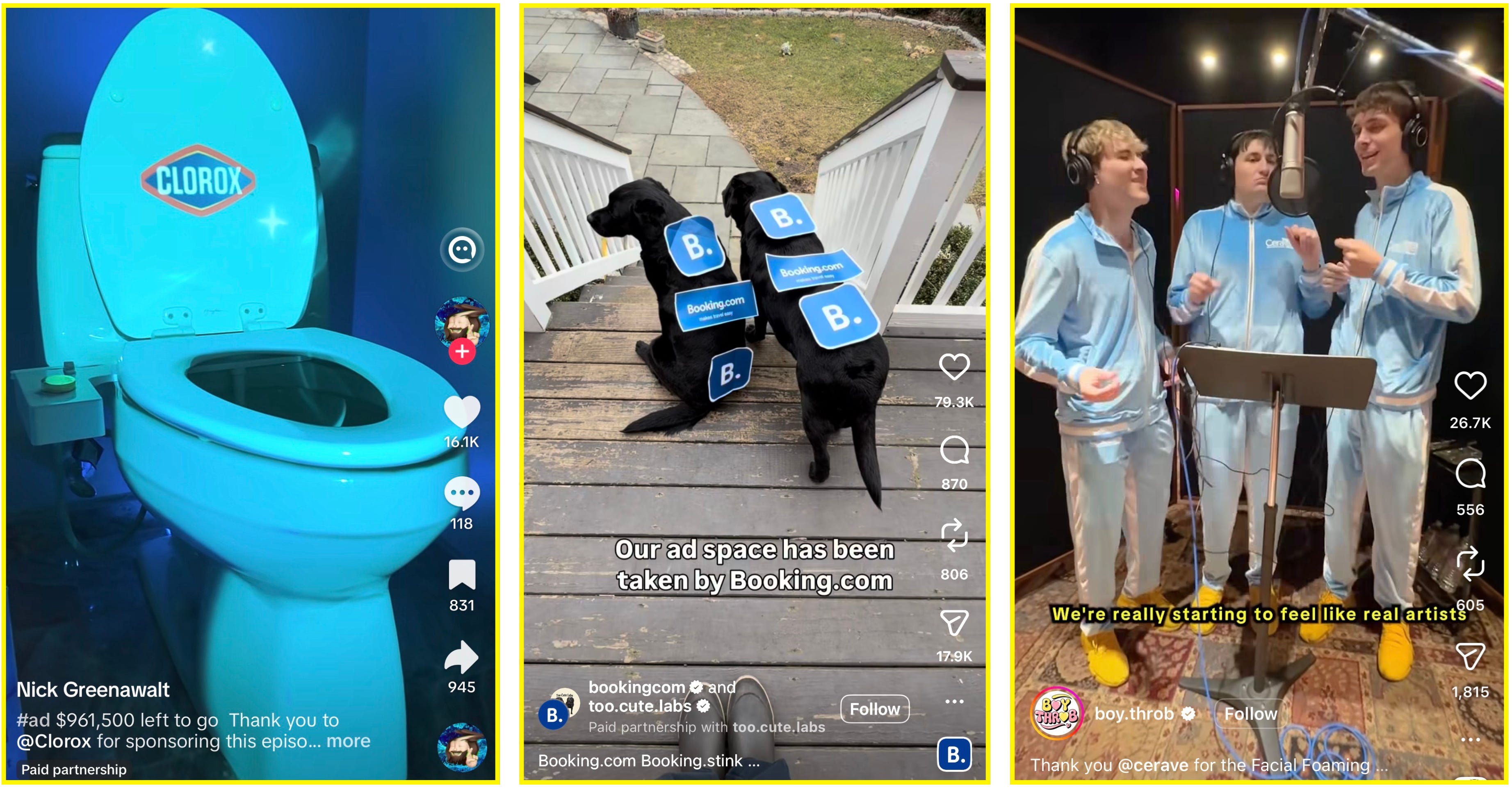
There are billboards everywhere for those with eyes that see! Look, I know it’s a joke but there’s something sort of disturbing about watching dogs walk around with ads all over them. Maybe it’s because we feel dangerously close to seeing a Kalshi or Polymarket ad on their back. Hold the line!
Delayed virality
This trend is contributed by Zach Schiffman, Senior Social Producer at New York Magazine.
Stop looking at day one views! I keep seeing videos take off days or even weeks after posting. Things have changed and performance immediately after posting is not the best indicator. While engagement within the first few hours always helps the long-term trajectory, it’s hard to predict how things will do based on the immediate anymore. Put your phone in a drawer after posting. Close out of Dash Hudson and check back in next week.
Marketing jobs look like Hollywood jobs
Gap hired for a Vice President, Development. The job description read, “As Gap Inc. expands its entertainment-driven storytelling efforts, this leader will collaborate with production companies, studios, and distribution partners to develop content that elevates brand relevance, drives cultural impact, and creates scalable storytelling franchises over time.” The pay is $300,000 - $360,000 USD.
Ffern, one of my favorite brands on social, already has a Head of Film. Scrubs brand FIGS also has a filmmaker on staff. Bilt debuted season two of their social show Roomies at Sundance this year. MLB teams are investing in in-house creative studios, with Ezra Siegel, Milwaukee Brewer senior manager of content, saying “We kind of internally dubbed our philosophy as ‘Arthouse Baseball.’”
I obviously have pivot-to-video PTSD but it’s hard to deny that this is the direction things are moving. So much of what people mean when they say a brand has a good social media presence is that they have a good video presence.
Brands went create mode
At one point this past quarter, this is what my explore page looked like.
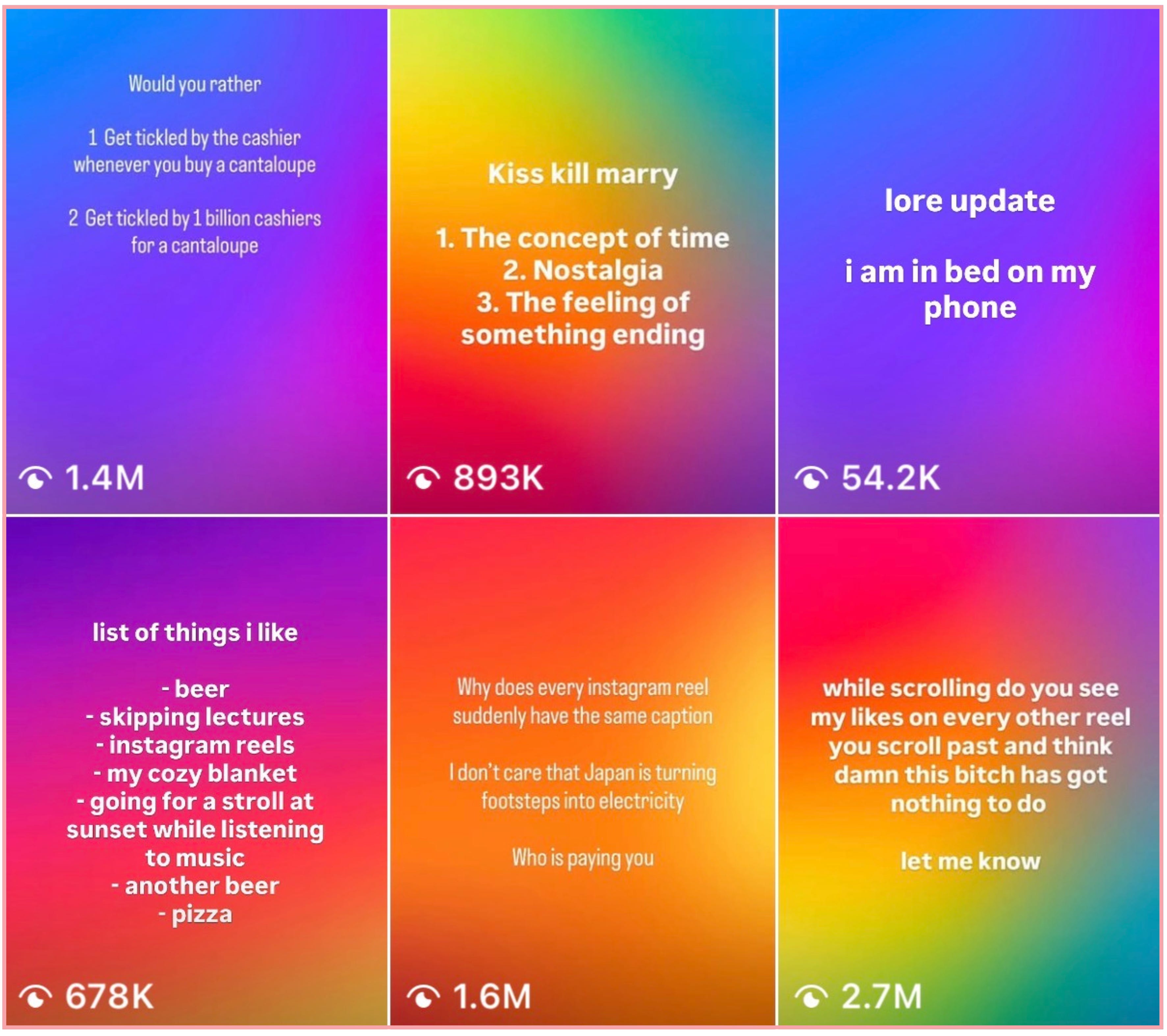
Look at those views! One example from user @justmesilly0_0 that says “can you hangout” has 246K likes and 210K sends. Brands got involved too. DoorDash did it here and Subway did it here.
Then Head of Instagram Adam Mosseri decided to announce three of the most anticipated updates to the app with native text on a grey background. One of them is his top performing non-collab post this quarter.
It makes sense why these types of posts are performing well. They are extremely shareable, with the text often acting as the message itself. Still, I’d hope the Head of Instagram would opt for a bit more creativity with his announcements.
Human interest = brand interest
L.L.Bean made a mini documentary about Robin, a Boat & Tote stitcher with three decades of experience. It has 340K views. The Metropolitan Museum of Art got almost 1M views on a video about conservator Cynthia Moyer, who was seen repairing a carved giltwood frame. American Girl shared a video of their set designer, Anuardi, talking about how a birthday party scene came together. One person commented “Please more behind the scenes and meeting the creatives and crew!”
These posts were all top performers for these brands this quarter. Importantly, the stories feel more like a segment from CBS Sunday Morning than a brand actively promoting itself. If a documentarian walked into your office, who and what would they find interesting?
While spotlighting an employee isn’t necessarily a new content format, the desire for these stories felt greater this quarter. Maybe as a response to the “AI is replacing employees” conversation that felt impossible to escape?
We reached peak whimsy
This trend is contributed by Naleen Camara, Social Media Manager at Amtrak.
TikTok users were already starting to usher in being whimsical (wearing brighter colors, jumping rope with a group of friends, picking flowers on the side of the road, etc.) late last year, but we’ve reached the point where it’s been aestheticized—just type in whimsy on TikTok and you’re spammed with Zara Larsson cosplay.
While brands aren’t outright saying they’re “doing whimsy” (Pinterest did put out a guide on how to be whimsical), there’s definitely an effort to make things feel less serious, more childlike and really pink. You can see Canva try it here and NYX Professional Makeup try it here.
Brands released soooooo many statements
First it was the fake apology letter trend. Then it was the fake deleted post carousel. Now it’s the fake Kit Kat statement response.
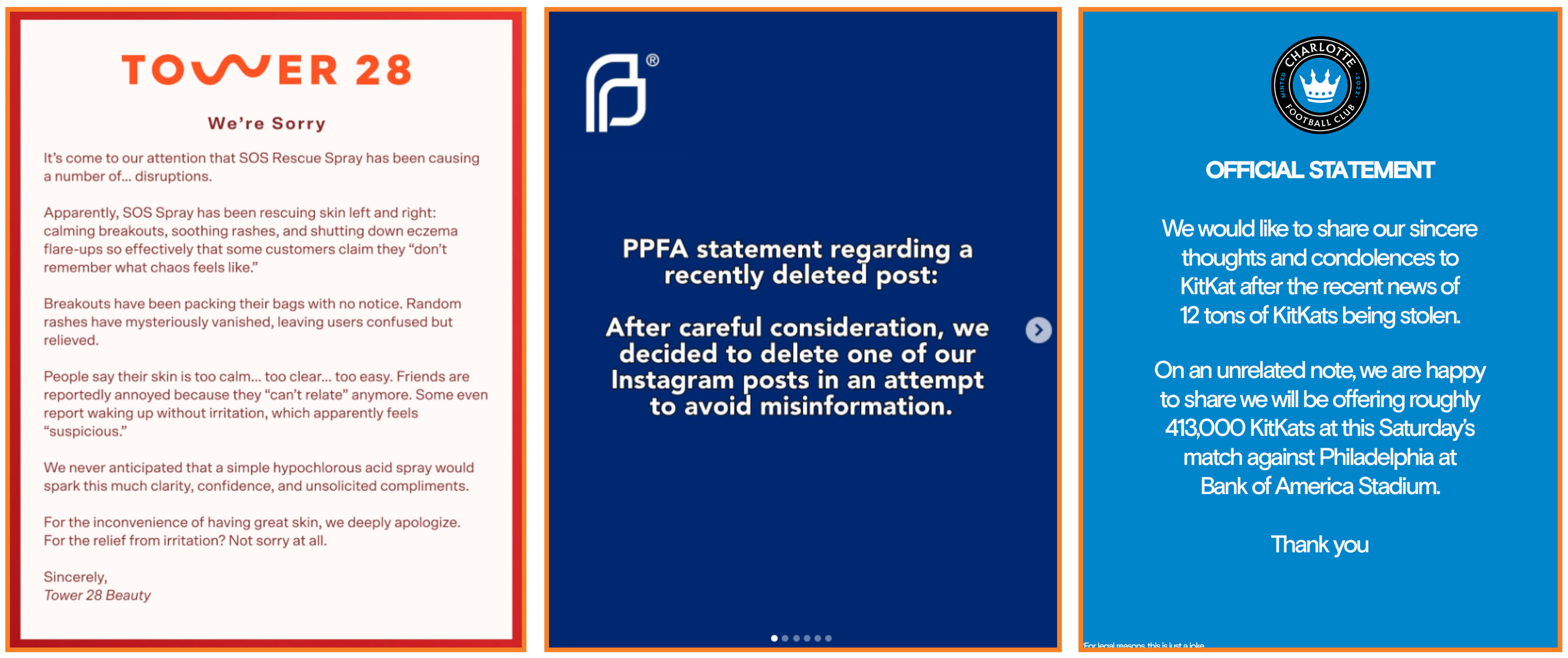
Two out of three of these trends were this quarter. Written statements like the above are meant to signal an important message from a brand. Just like an ambulance siren, it feels wrong to abuse the attention it draws. One person on Twitter saw a serious statement and shared that they thought it was going to be about Kit Kat. Please! We need a moratorium on fake brand statements in Q2.
“Drop everything” campaigns
Staples Baddie. Topgolf’s party for Logan. Pet Smart or Pets Mart. The Dr. Pepper jingle. Some of the most memorable campaigns or moments this quarter were never even on the brand’s calendar.
A few years ago, when your brand was going accidentally viral, the first question would be How many followers does the account have? That question is now moot. Thanks to interest-based algorithms, someone with 300 followers can shoot your brand into the FYP stardom. Will you be ready?
Importantly, if your brand is going viral for something neutral or good, view this as an opportunity, not an inconvenience! Drop what you’re working on! Make this your moment! Consumers will be rooting for you to go big, don’t let them down.
Performative offlineness
This trend is contributed by Carmen Vicente, Content and Social Lead at Slate and writer of Scroll Sick.
At the tail end of last year every trend report forecasted an analogue movement that would define 2026, and we bought it because we wanted to believe that a mass exodus from our screens was just a new year’s resolution away. Instead, we got “Performative Offlineness” in the form of aesthetically edited videos about what’s in my analogue bag, restorative digital detoxes, “raw-dogging for 1 hour”, and “how to be chronically offline”. Bricks quickly became a must-have item for the “aspirationally offline” among us, and while it’s true that the internet loves to lambaste imperfect effort, it appears that offline is not somewhere we’re willing to go, but rather, just another style of content we like to consume in FYPs.
Influencer marketer or talent scout?
When I asked Kelly Gordon, marketing talent recruitment lead at Creative People, what hiring trends she was noticing she said there’s been an uptick in creator and influencer partnership roles. But brands aren’t looking for someone who knows how to negotiate or close deals—they want someone with taste. She says the role has shifted more to “talent scout”. She’s focused less on finding someone who knows how to structure deals and more on finding someone who lives on the internet and knows how to spot the next [insert already very popular influencer]. Brands like Anthropic, Pandora, and OK COOL are all hiring roles like this right now.
Twitter fueled big brand moments again
This trend is contributed by Dejaih Smith, Senior Social Community Manager at Sony for Jeopardy and Wheel of Fortune and Writer/Trend Analyst for Silence, Brand!
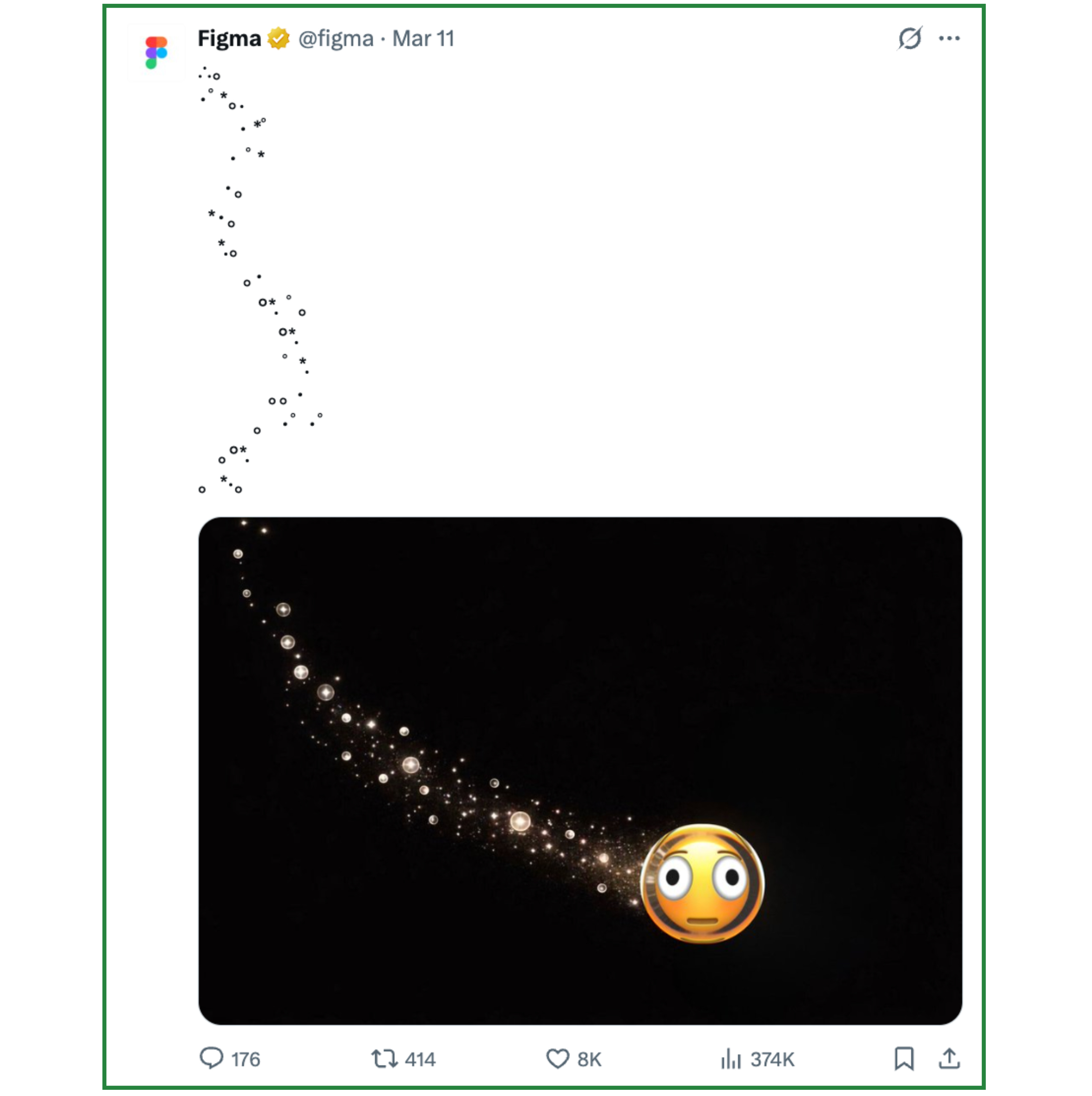
From the slice photo format to Mama Kelce’s remodeling saga to Kit Kat gate, Twitter felt like an important platform for brands again this quarter. My favorite trend was the ‘Distorted Face emoji’ because while it eventually became popular with brands, it started as a reflection on how people feel about the current state of the world. I wonder if the internet’s prediction of it being “most-used emoji in history” comes true...
Did TikTok slow down?
The team over at Garbage Day has been documenting the most popular posts on platforms for a long time now. Specifically, they look at viral repeats as a way to track stagnation. They recently shared data that makes them think TikTok is slowing down.
They wrote, “Since TikTok US launched we’ve continued to see the same videos or the same accounts pop up in our list of most-watched TikToks of the month. Which never ever happened before.” They went on to say, “Whether it’s algorithmic meddling or just the natural slumping of a social network past its prime, something is certainly happening to the platform.” They also proposed a more charitable conclusion: that the app is just getting “more American”, with less of a prioritization on individualized experiences and instead more similar FYP experiences between users.
Meanwhile, a recent Harris Poll survey that found Gen Z’s negative feelings about TikTok are starting to affect their usage habits. “Gen Z still shows up to TikTok every day, but they’re showing up skeptical, exhausted, and nostalgic for a version of the platform that’s already gone.”
Our feeds got more ribald…but with purpose
This trend is contributed by Paulina Mangubat, Digital Content & Creative at Democratic National Committee.
The DNC recently raised some eyebrows by posting a suggestive triptych of graphics touting the Mamdani administration’s approach to city services. Inspired by viral sports Instagram posts, the graphics have accumulated over 7.6M impressions on the DNC’s Instagram account—plus millions more from people who have reposted the graphics elsewhere (hi, Sniffies!)
The graphics made it fun to talk about city services: “The way I RAN to the comments,” one Instagram user wrote. Sprint on down with them and you’ll find, alongside more innuendo, actual New Yorkers confirming that their streets were cleared of ice and that Mayor Zohran Mamdani was behind it (“can confirm. ❄️ been all over brooklyn and it’s all clear. day after a blizzard. great leadership,” reads one such comment.)
The posts were also highly effective in pushing our message out from our branded account and into the unpredictable, yet infinitely more valuable, non-branded internet. The graphics made their way into private group chats and DMs, where people shared them without knowing their provenance. It’s Organizing 101: Your best messengers are the people your audience knows and trusts in real life.
We—and many other brands—are heading into Q2 with the goal of finding the next sticky something that breaks our message into the private, non-branded internet.
Brands jumping on trends went out of style
This trend is contributed by Felipe Mendez, Manager at UTA Marketing’s Next Gen Practice.
The wild west days of brands jumping on trending audios is over. For lack of a better word, it’s cheugy. The brands winning now are building original content. Not just through serialized shows, but through an overall presence that just feels novel. Like what Pufferfish agency is doing with Airlearn or how The Village Confectionary is launching.
If your brand is relying on the platform to tell you what’s next, you’re already too late. The most telling sign? The best creatives I talk to are often the ones scrolling the least.
AI as a character in campaigns
This quarter, AI wasn’t just a tool brands use in the background, it was the star of their campaigns.
Equinox kicked the year off with their “Question Everything But Yourself” campaign, which used AI as a plot point in the story the brand was telling. Their CMO told the WSJ that showing both AI slop and real people “offered a nice contrast to what we’re seeing on social and really reinforces this notion of the only thing you can believe in is yourself.”
Meanwhile, Aerie took a different route in a recent campaign starring Pamela Anderson. The campaign message? No AI generated people or bodies. Ever.
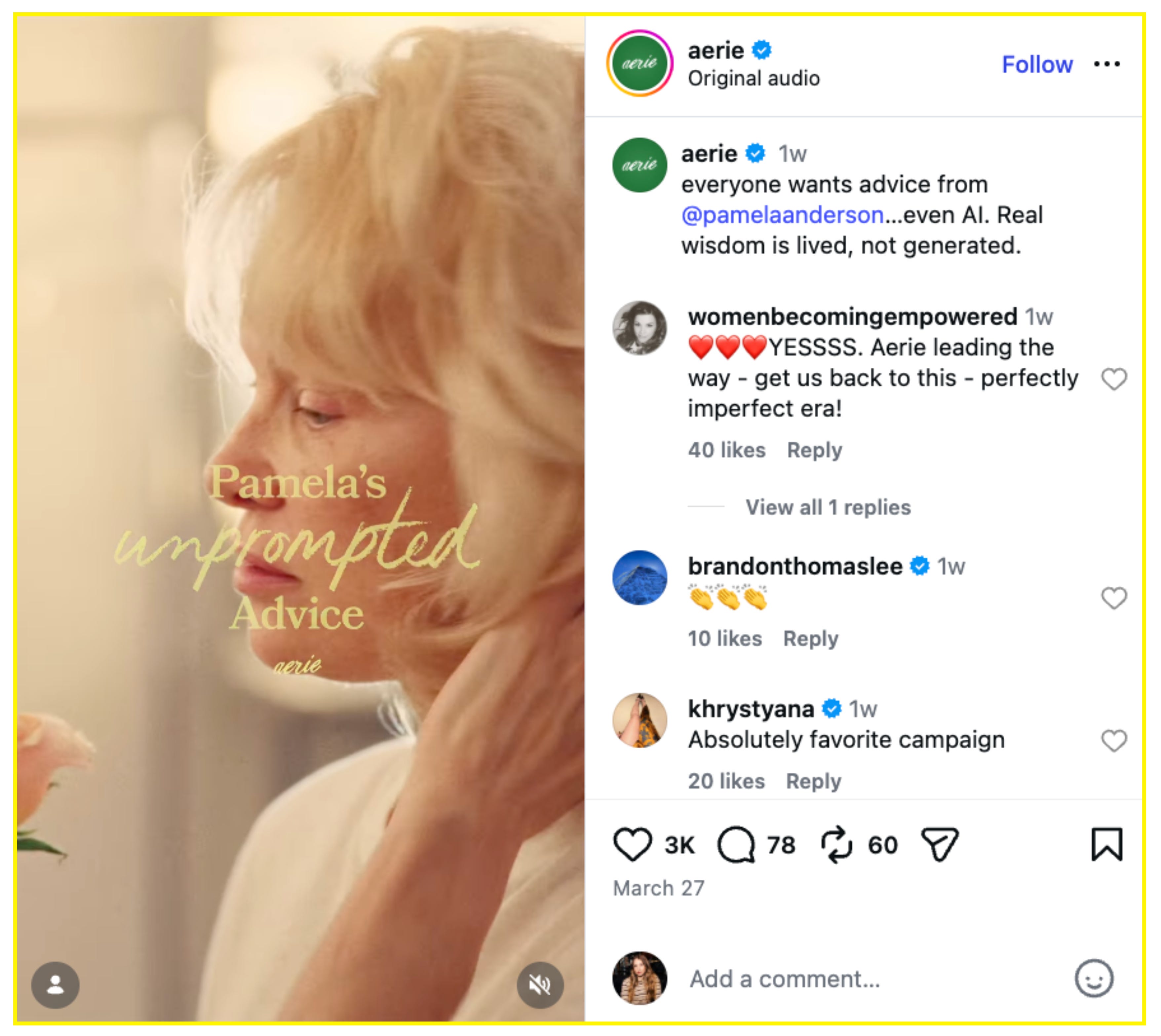
Up until now, we had really only really seen brands make statements about AI-generated content through one-off social posts, like Chili’s did here. I have a feeling we’ll see more campaigns that use AI as a central character.
Tension between Trial Reels opportunities and creative resource realities
This trend is contributed by Kendall Dickieson, Social and Influencer Consultant and Writer of No Filter.
Trial Reels offered brands a meaningful opportunity to increase content output and test what resonates with new audiences. The problem is that many brands want the Trial Reels results without investing in the infrastructure needed to deliver on the promise. For Trial Reels to be effective, brands need to be testing lots of different videos, formats, intros, and more. This tension between high output expectations and low resource commitment is one of the most common friction points I’m seeing right now.
Brands dug into the archives
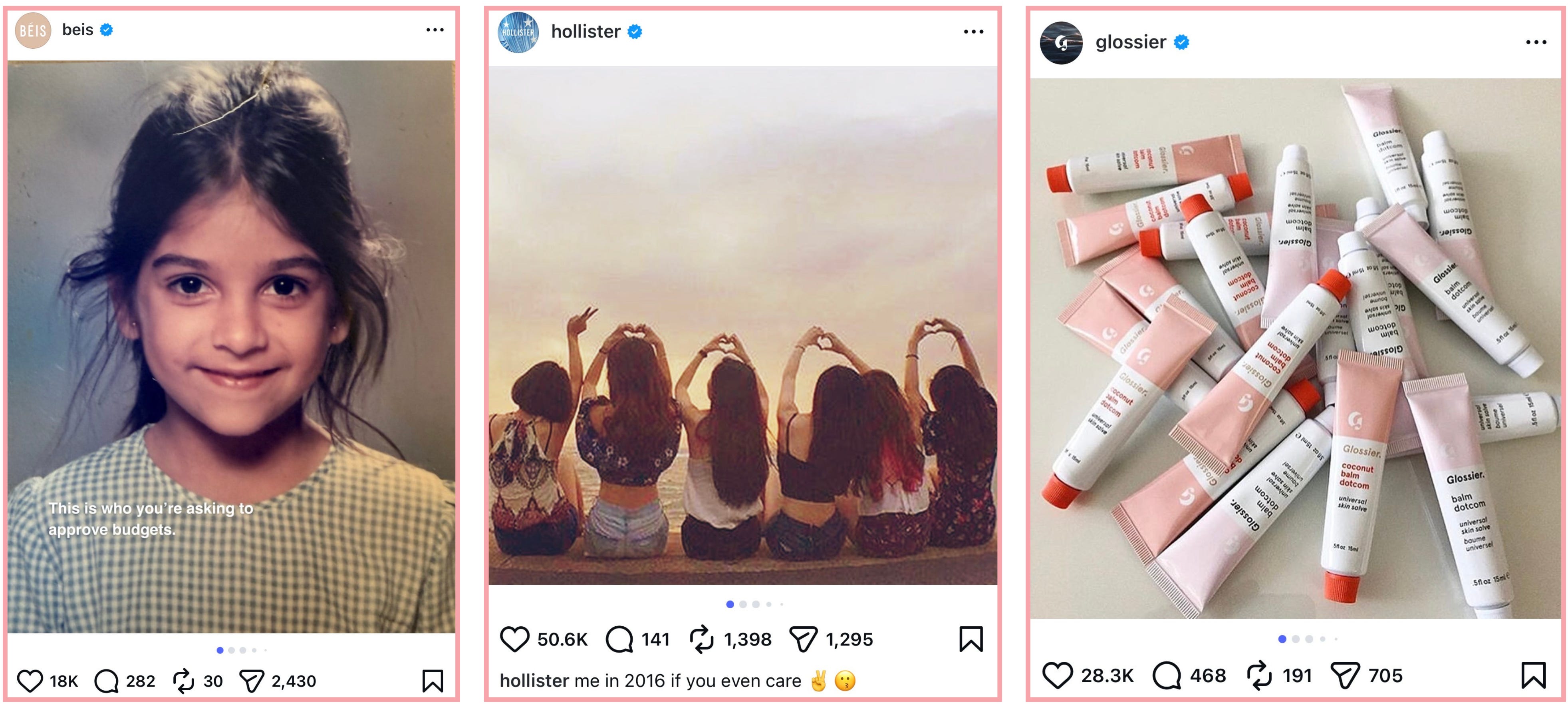
Some of the biggest social media trends this quarter all revolved around opening up old photo albums.
First there was the “this is who is ____” trend, with job responsibilities typed over childhood photos of actual team members. For BÉIS, that trend post was a top performer of the quarter. When I asked Senior Social Media Manager Paige Tapp why it worked, she shared, “So many times we think of a celebrity face or an executive in a suit calling all the shots, but this trend allowed us to highlight our real team in a more lighthearted, entertaining way. We're always looking for ways to connect with our audience, and pulling back the curtain to show our team is one of the best ways we've found to do it.”
Then there was the “what were you like in the 90s?” trend where legacy brands like Columbia Sportswear and Old Navy jumped in and the 2016 trend with Hollister and Glossier having a fun time. Nostalgia is nothing new on social, but it really peaked this quarter.
A refocus on resonance
The one conversation that kept coming up this quarter was around resonance. It feels like we all found our footing on how to get engagement in these interest-based algorithms, but is what’s breaking through even memorable? Somewhere along the way we prioritized reach over remembrance. Social posts over social presence. The pendulum is swinging back.
I think about what Merit’s CMO Aila Morin said in my interview with her: “We used to try participating in TikTok trends. My theory though is that why would you even want that to be the content that goes viral? Because it’s probably not the best representation of your brand. And is that what you want people to remember?”
Thanks for reading! If you made it this far, it means you’re a paid subscriber and have access to the Link in Bio Discord. You can join here.
I want to remember this line - "The best creatives I talk to are often the ones scrolling the least." I needed to read this!
Thanks for including me among so many other whip-smart strategists!