


A little over a year ago, I asked an important question in this newsletter: Are you a Fast Brand or Slow Brand on social media? The team structure of a brand that wants to be the first to post a meme about Taylor Swift’s engagement looks very different from the team structure of a brand that wants to tell timeless stories. The roles at a Duolingo are different than the roles at a Ffern.
Both of these strategies work, but too often I see leadership of Slow Brands ask their social teams to act like Fast Brands, with no infrastructure in place. They will message their team IKEA’s viral Severance post, for example, and say, “Why didn’t we do this?”
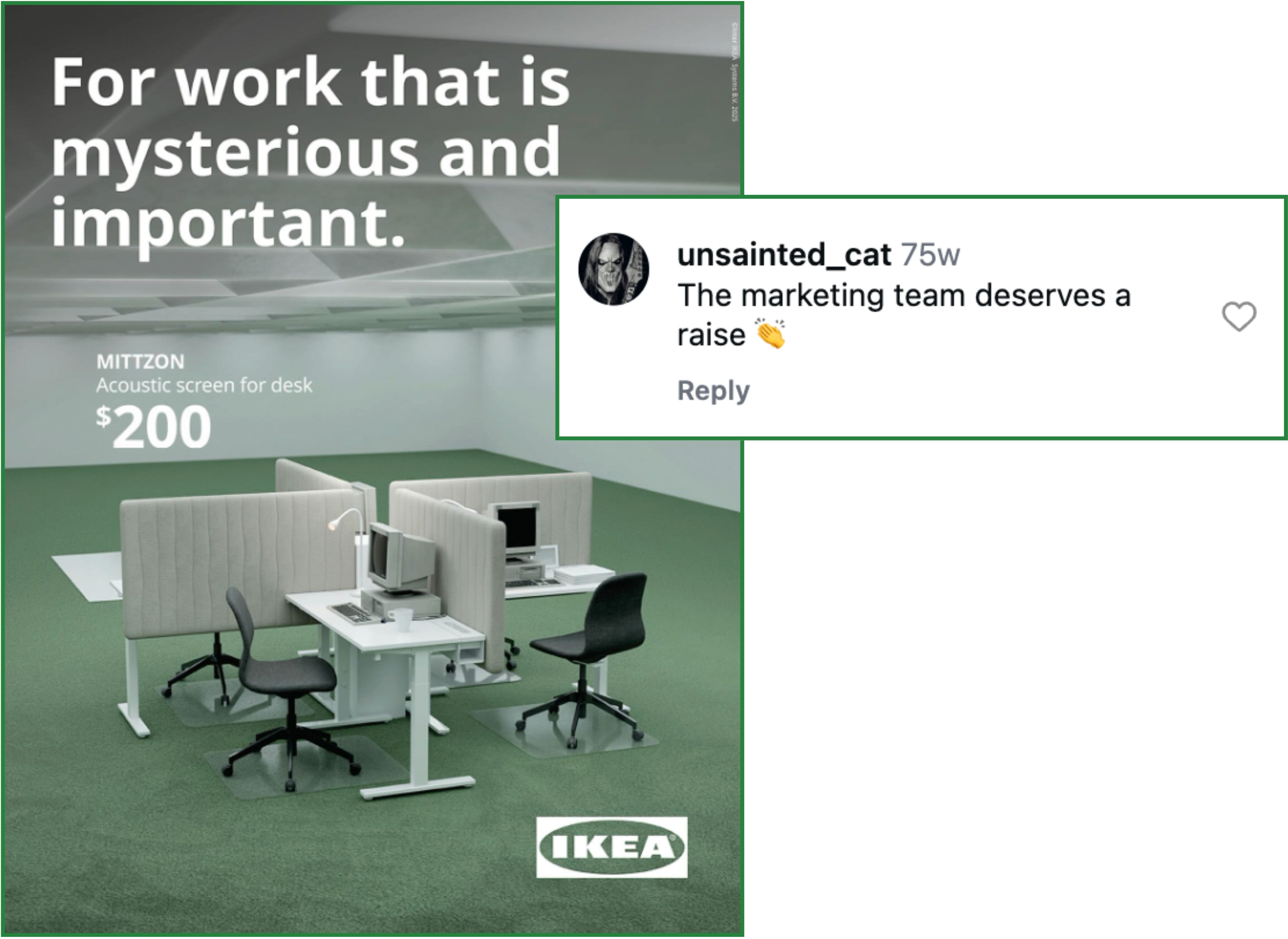
What these leaders fail to understand is that there’s a reason that a brand like IKEA is able to quickly (and consistently) react to culture. It’s because they have an entire rapid response team dedicated to these moments. The Responsive Project Team meets multiple times a week, has a dedicated Teams channel, and runs every post through a checklist to make sure no one comments “silence, brand”. You can thank them for wink-y posts about Zara Larsson and Punch the monkey, with the latter garnering 214K shares and being their most-liked organic campaign of all time.
In today’s newsletter I am talking to Elissa Wardrop, Global Social Media Specialist at IKEA, about the processes it takes to move fast. We talk about the “originality test” she puts every post through, the responsibilities of the Responsive Project Team, and the mistakes she sees brands make when implementing a reactive strategy.
If you enjoy free interviews like this one, you can upgrade to a paid Link in Bio subscription. You’ll get weekly strategy newsletters and quarterly trend reports, along with access to the Discord community.
I want to note that this newsletter is an educational resource and can likely be expensed through your company. I have even written a handy template for you to use when asking!
Rachel Karten: First, can you tell me a bit about your role?
Elissa Wardrop: It’s not a typical social media job…but then again, what is?!
Rather than managing channels, I work across various project teams to shape social strategy and create content for IKEA retail with operations in 32 markets around the world. One of these is our Responsive project team, where I create fast, culturally relevant content around trends, news, pop culture, and key moments.
I also lead our internal social media community across all of our countries day-to-day, which is probably my favourite part of my role. I get to communicate with social specialists all over the world, learn about their cultures, what’s trending in their markets, and constantly share inspiration with each other.
Rachel: How would you describe IKEA’s approach to social media?
Elissa: Human, humble, and unmistakably IKEA.
Our creative direction is built around three words: simple, playful, and inclusive, which I think translate really naturally to social media. We don’t want to overcomplicate things, we want to speak to people like people, and importantly, we don’t take ourselves too seriously.
A big part of that playfulness is what we call the IKEA “twinkle in the eye.” It doesn’t necessarily mean telling jokes or trying to be funny. It can be a clever connection, an unexpected little surprise, or simply a choice of words that makes you grin.
We create everything from deeper, original storytelling to quick responsive content around what people are talking about right now, but whatever we’re creating, the question is always: does this feel unmistakably IKEA?
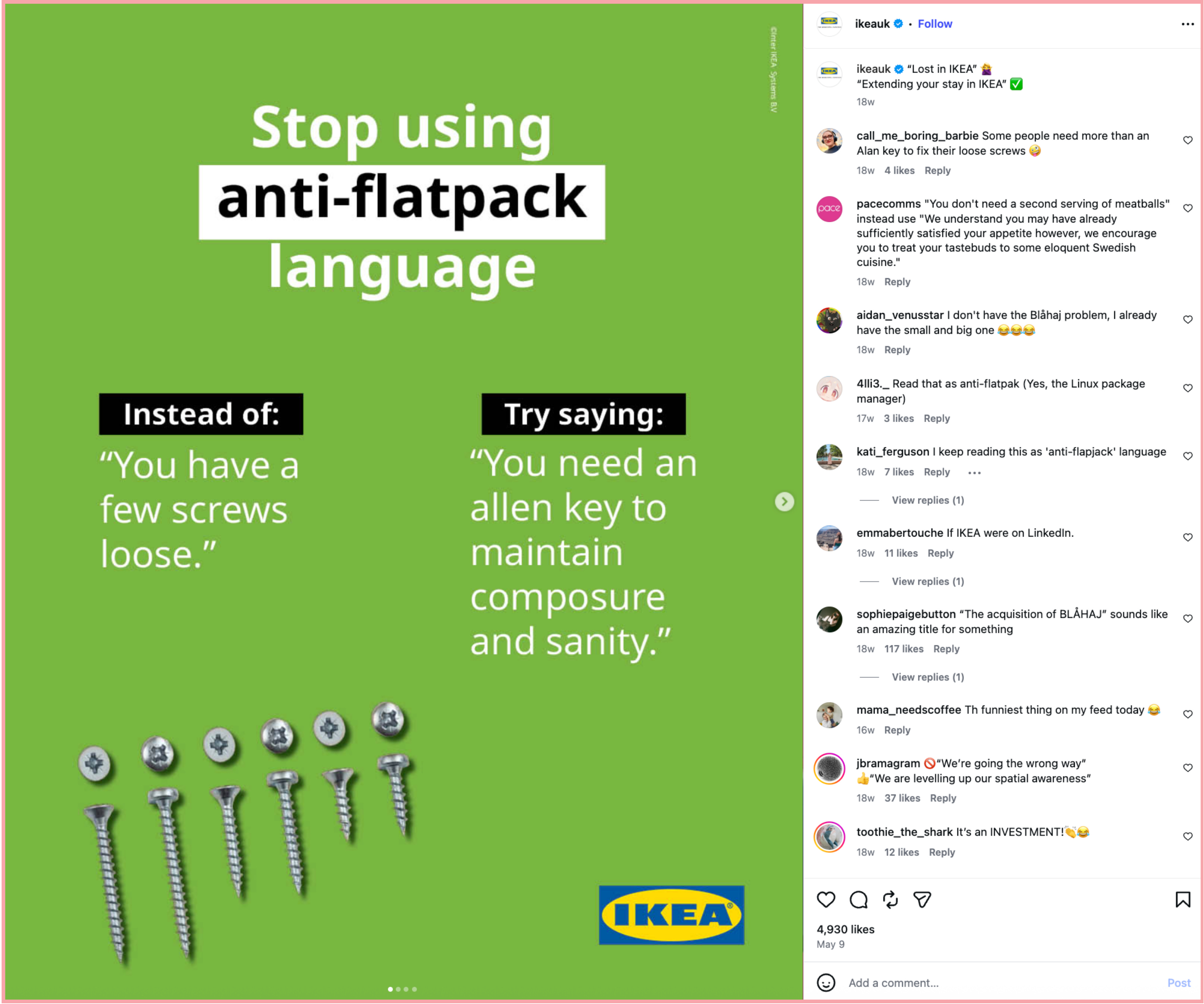
Rachel: We’re posting at a time when people are very sensitive to how brands engage with cultural moments and trends. There are a lot of “silence, brand” comments. Your reactive strategy avoids that sentiment. I have a theory on why, but what would you say?
Elissa: I think a big part of it is that we don’t feel like IKEA needs to be part of every conversation.
When we do respond, we want there to be a genuine IKEA reason for us to be there—whether that’s a clever connection to one of our products, life at home, the IKEA experience, or our Swedishness.
And importantly, we want to contribute something new rather than just recreate the same trend with an IKEA logo on it. As I always say: we want to innovate, not imitate.
Sometimes the best response is just one image and a few words. And other times the best response is not to post anything at all. Knowing when to stay quiet is just as important as knowing when to join in.
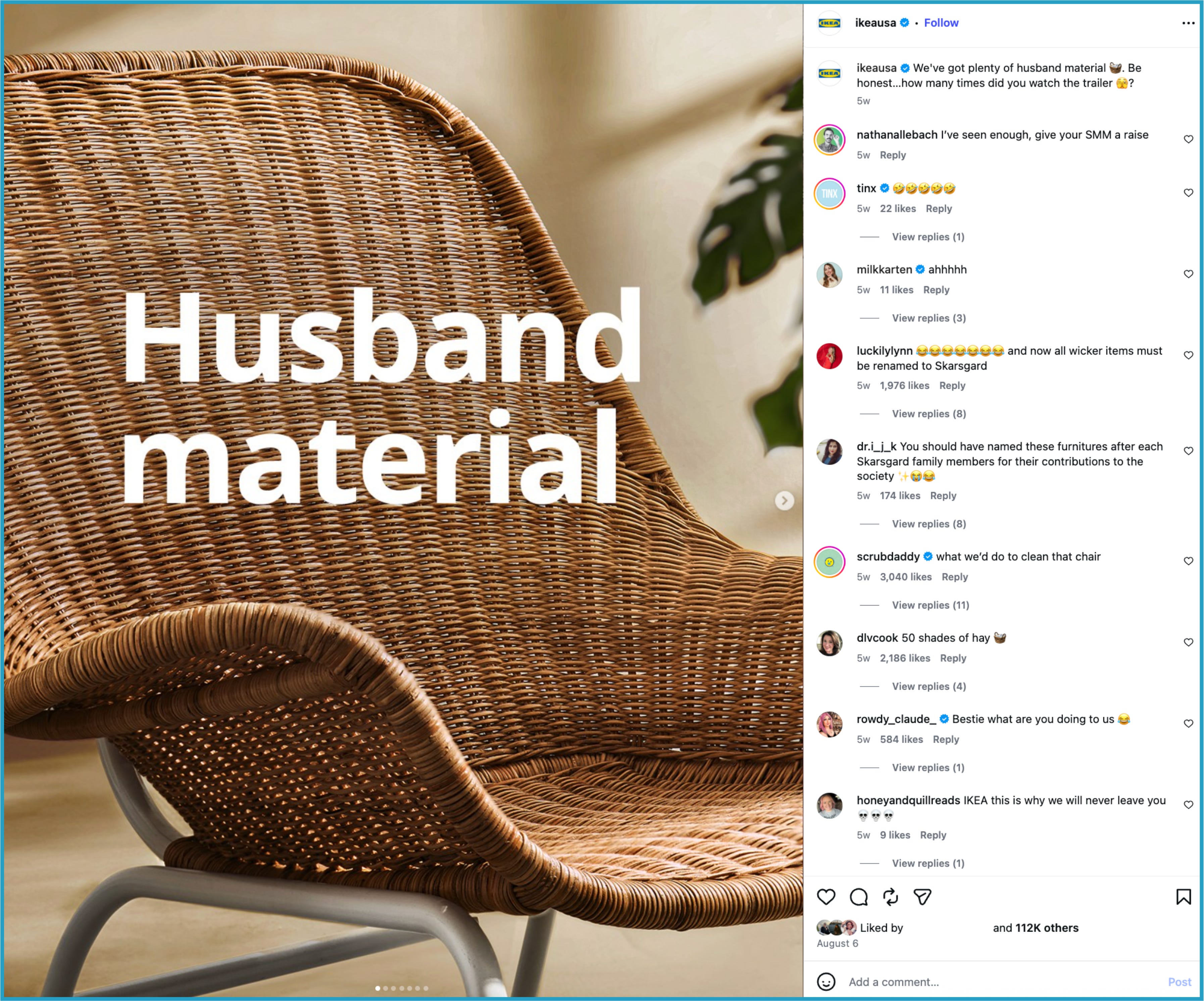
Rachel: Many social media teams have a desire to be responsive but lack the infrastructure to move quickly. What structural meetings, processes, or philosophies do you have in place to enable this responsiveness?
Elissa: We’re lucky to have a small Responsive team that comes together two to three times a week, with a very active Teams chat in between where we’re constantly sharing things we’ve spotted and bouncing ideas around. We’re different ages, nationalities and have different interests, so our feeds look completely different and we naturally spot different things.
We also have a cultural calendar that maps out upcoming moments across pop culture, sport, movies, music, fashion, award ceremonies and more. It means we know what’s coming and can keep a closer eye on those moments as they happen, ready to jump in if something relevant and ownable for IKEA emerges. Alongside that, we follow marketing and culture pages, newsletters, Google Trends and the news, so we can keep a finger on the pulse of what’s happening.
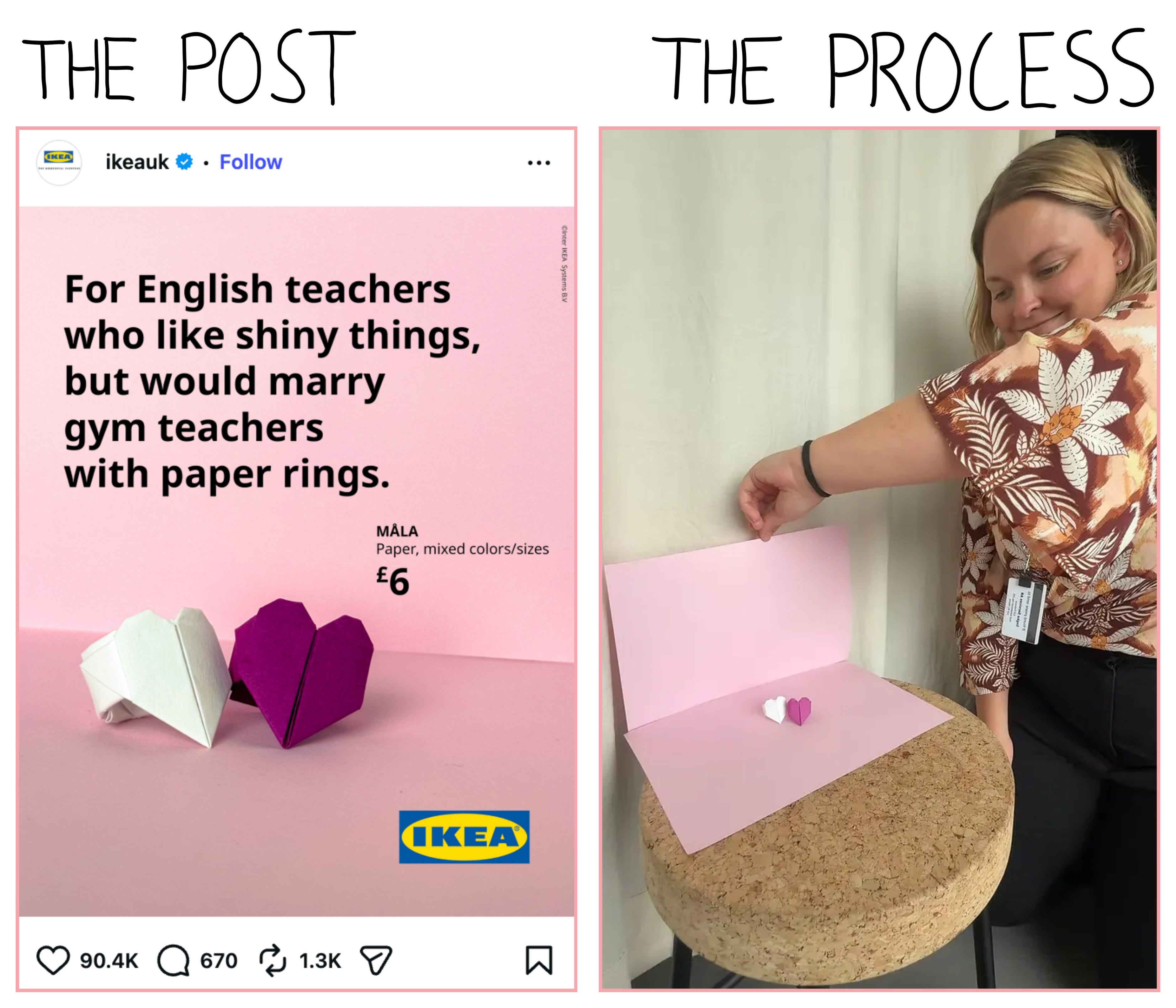
Another big part of our philosophy is not overcomplicating the execution. Responsive content doesn’t always need a big production behind it. It might be an iPhone photo, a quick Photoshop, or some assistance from AI. Our Taylor Swift engagement post, which became IKEA UK’s most-shared Instagram post, was literally photographed against two pieces of paper on a stool next to a window. Sometimes the simplest way of bringing a good idea to life is all you need.
But I don’t think you necessarily need a dedicated team to be responsive. What matters more is having clear processes, clear guardrails and trust—empowering your social team to make decisions, while knowing when they need to bring in additional support or approval.
Rachel: What questions do you ask when deciding whether IKEA should react to something?
Elissa: We actually have a little checklist we run through.
First, we read the room. What’s the general sentiment around the conversation? Could our response be insensitive, make light of someone’s real-life misfortune, perpetuate stereotypes or exclude anyone? Is it appropriate for children?
We also consider whether there are any issues around safety, sustainability, copyright or IP, and of course whether it aligns with our brand values, tone of voice and guidelines.
Then there’s the practical side: can we create something quickly enough for it to still be relevant, without compromising on quality?
And finally, can we bring a unique, ownable IKEA angle to it? If the answer to any of those questions doesn’t feel right, we’re completely comfortable sitting that one out.
Rachel: Can you share some metrics that show the impact of these response posts? Is the Punch the monkey post still the most-liked?
Elissa: Yes! When looking at the total number of likes across all of the IKEA accounts that posted the Punch Responsive post, it’s still our most-liked organic campaign. It was crazy seeing how far it travelled. It was picked up by media around the world, including ABC News Australia—where my dad back home saw it on TV—The Washington Post, The New York Post, The Japan Times and many more. We also saw DJUNGELSKOG selling out across multiple countries following the post.
But some of my favourite measures of impact aren’t really traditional metrics. Our Severance post got a comment from MrBeast on a Twitter re-share, saying “I need this,” and the show’s Emmy Award-winning Production Designer Jeremy Hindle later featured it in his keynote at Figma Config.
I also love when the people we’re referencing actually find the content themselves. Actress Yerin Ha commented and re-shared our Bridgerton post, Shonda Rhimes liked it, and Zara Larsson also liked and re-shared our Stateside post.
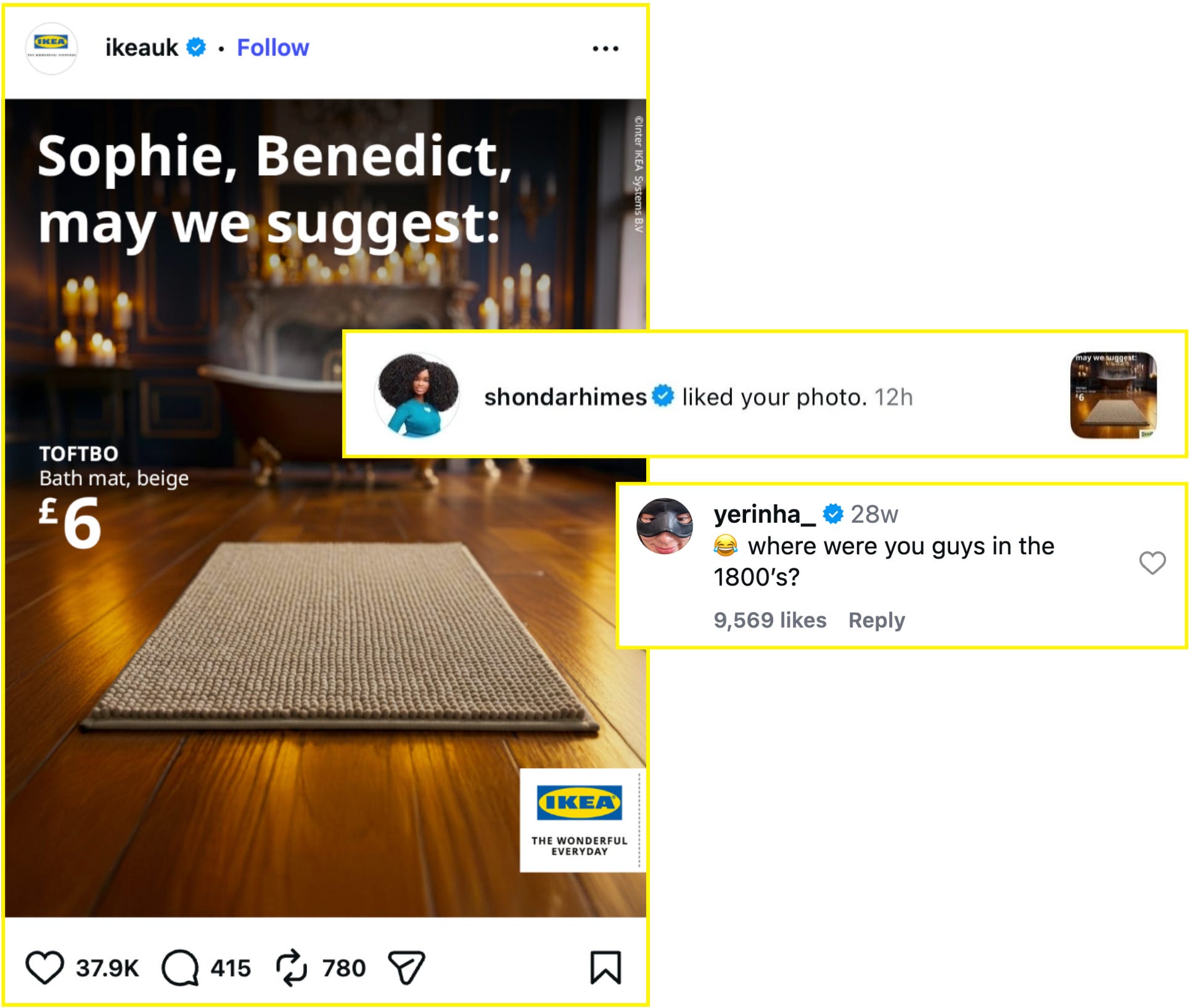
Those moments, alongside the big numbers, are a really nice indication that the content is travelling beyond just the people who already follow IKEA.
Rachel: I think about the behind-the-scenes breakdown of the Punch post often. Can you share how that post came together here?
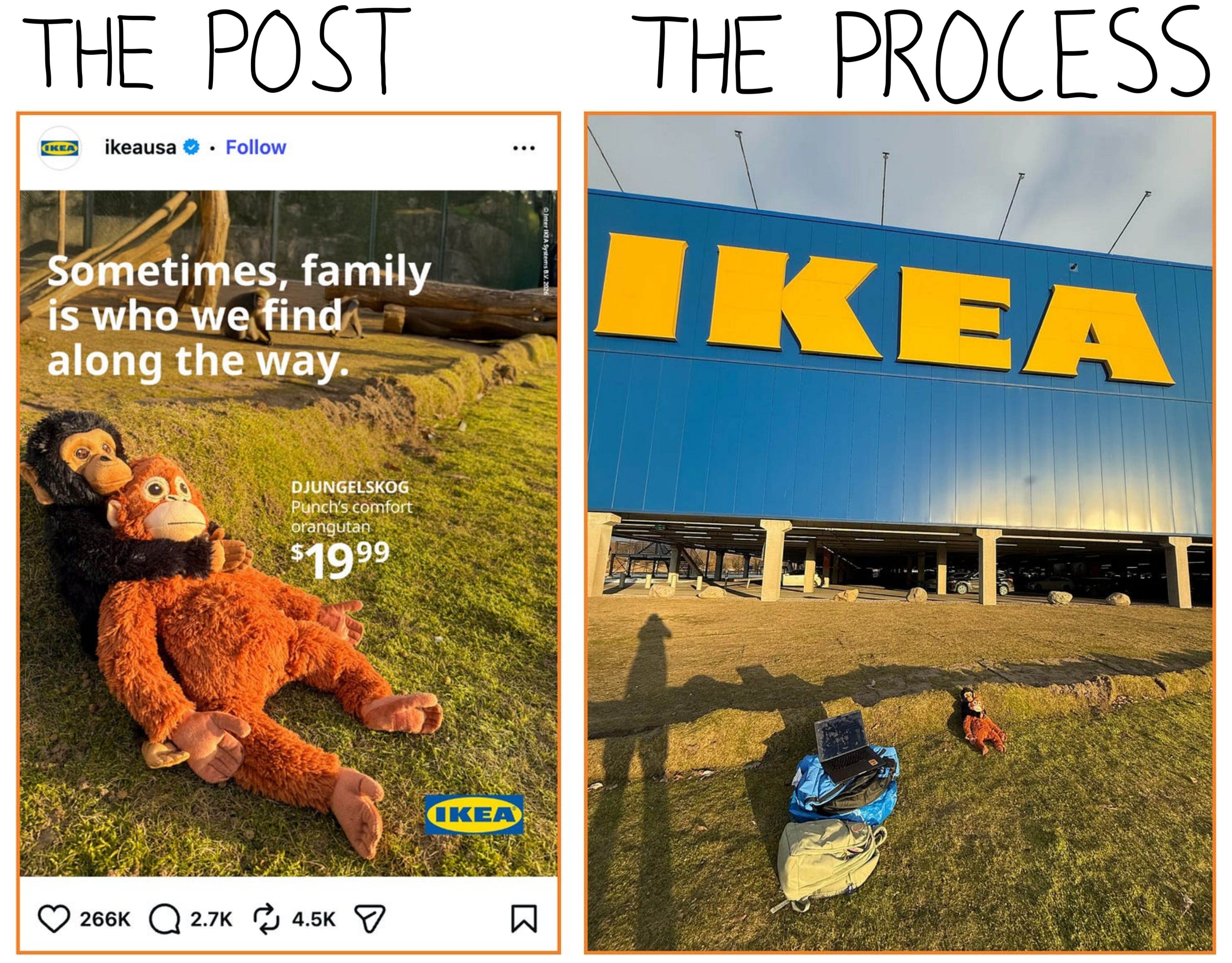
Elissa: When I noticed Punch starting to trend, I immediately reached out to our IKEA Japan team and learnt they were already in close contact with the zoo. I shared a rough mock-up of the idea, and they worked directly with the zoo to get their feedback and approval.
Once we had the green light, I grabbed the two soft toys and headed outside the IKEA store to find somewhere to photograph them. Sweden was just coming out of winter, so the glamorous location ended up being the only patch of grass I could find—against a mud track that was left behind by a truck that had gotten stuck in the winter!
It took 38 attempts to get the final photo, the whole shoot took 20 minutes. Once I took that last photo, I then sat on the patch of grass and edited it. Nine minutes later, I had shared the finished asset with our country’s social teams.
I think that behind-the-scenes story sums up Responsive quite nicely. Something that ultimately reached tens of millions of people started with two soft toys, an iPhone, and a patch of grass outside IKEA.
Rachel: What mistakes do you see other brands make when implementing a reactive strategy? What advice would you give?
Elissa: I think the biggest mistake is forcing it. Sometimes you see a brand jump on a trend and the connection to their brand or product is such a stretch that it just doesn’t really make sense.
There’s also the originality test: if another brand could take your post, put their logo on it and it would still work, then it probably isn’t unique or clever enough. There should be something about the idea that makes you think, “Of course this brand posted this!”
Don’t jump on something just because everyone else is doing it. Find the angle that only your brand can bring—and if you can’t find one, it’s completely okay to sit that trend out.
Rachel: Your LinkedIn bio says “I was known as the weird kid with the camera, staying up all night to make the perfect MySpace.” How has that informed the work you do now?
Elissa: I don’t think I’ve changed that much, I’ve just somehow managed to turn it into a career!
I was always making things, coming up with slightly weird video ideas and obsessing over the tiny details. One of the videos I made as a kid was called “Are you a scruncher, folder or scrunfolder (i.e. both a scruncher and a folder)?” To film it, I dragged the ironing board into our tiny toilet, put the camera strap underneath the iron to hold it in place, and angled the camera down towards the toilet. So apparently finding slightly questionable, no-budget ways to get the shot has been in me for a while! The tools have changed quite a bit since then, but apparently I haven’t.
Rachel: What advice would you give someone who wants to work in social media?
Elissa: In the words of the great Ted Lasso…be curious! You don’t need to wait until someone gives you a social media job to start building the skills for one. Make videos, take photos, write captions, learn how to edit, experiment with AI, start a silly account about something you love, just keep creating and learning.
I’d also try to become a bit of a generalist. Over the years, social media has given me an excuse to dabble in photography, video editing, Adobe, copywriting, community management, strategy, analytics and probably a million other random things. You don’t need to be an expert at everything, but knowing how to do a little bit of everything is incredibly useful.
And stay curious about things outside of marketing too—movies, TV, music, sport, gaming, fashion, internet culture, news, or whatever genuinely interests you. Some of the best ideas come from making connections between completely unrelated things.
What I’m scrolling
Why isn’t Apple sharing their very fun TikTok videos to Instagram? In the past week, the brand has garnered almost 50M views on TikTok by sharing clever vignettes featuring their products. (I love this one!) None of them have been shared to Instagram. My hunch is that they think they are too “silly” for the platform, but I’d argue they could loosen up a bit more on there. What do you think?
Brands and creators are copying Yung Lean’s music video choreography using AI. Creator Jakob Owens said it best: “We need legal ramifications NOW”.
Forward your boss UTA’s Culture Index. I first read this report a few months ago, but forgot to share it here. I think it’s excellent! “A brand can have massive reach and robust growth metrics. But if consumers do not perceive it as connected to their world, it does not exist in culture.” Download it here.
Back in June, I wondered if we’d soon see brands hire sketch artists to document their events. This week J.Crew hired @really_bad_portraits for their NYFW party. The original examples I shared were Adam Faze sharing his birthday sketches here and a NY Tech Week party doing the same thing here. Fun!
I interviewed Columbia Sportswear about their sponsored post with Kennedy Eurich. “The biggest lesson was one I’ve seen reinforced time and time again: pick the right talent, then trust them.”
A24 launched a new social show called “The Board”.
Ian Evans, who has spent four years making brilliant videos for software company tldv.io, announced he was leaving on the brand account. The post has over 8K likes and almost 500 comments. One person wrote, “I think you know you built something really special when people are going to miss you from a brand account. Can’t wait to see what you do next and I’m going to miss having your content to send to my coworkers. 👏”
Check out the Link in Bio Job Board
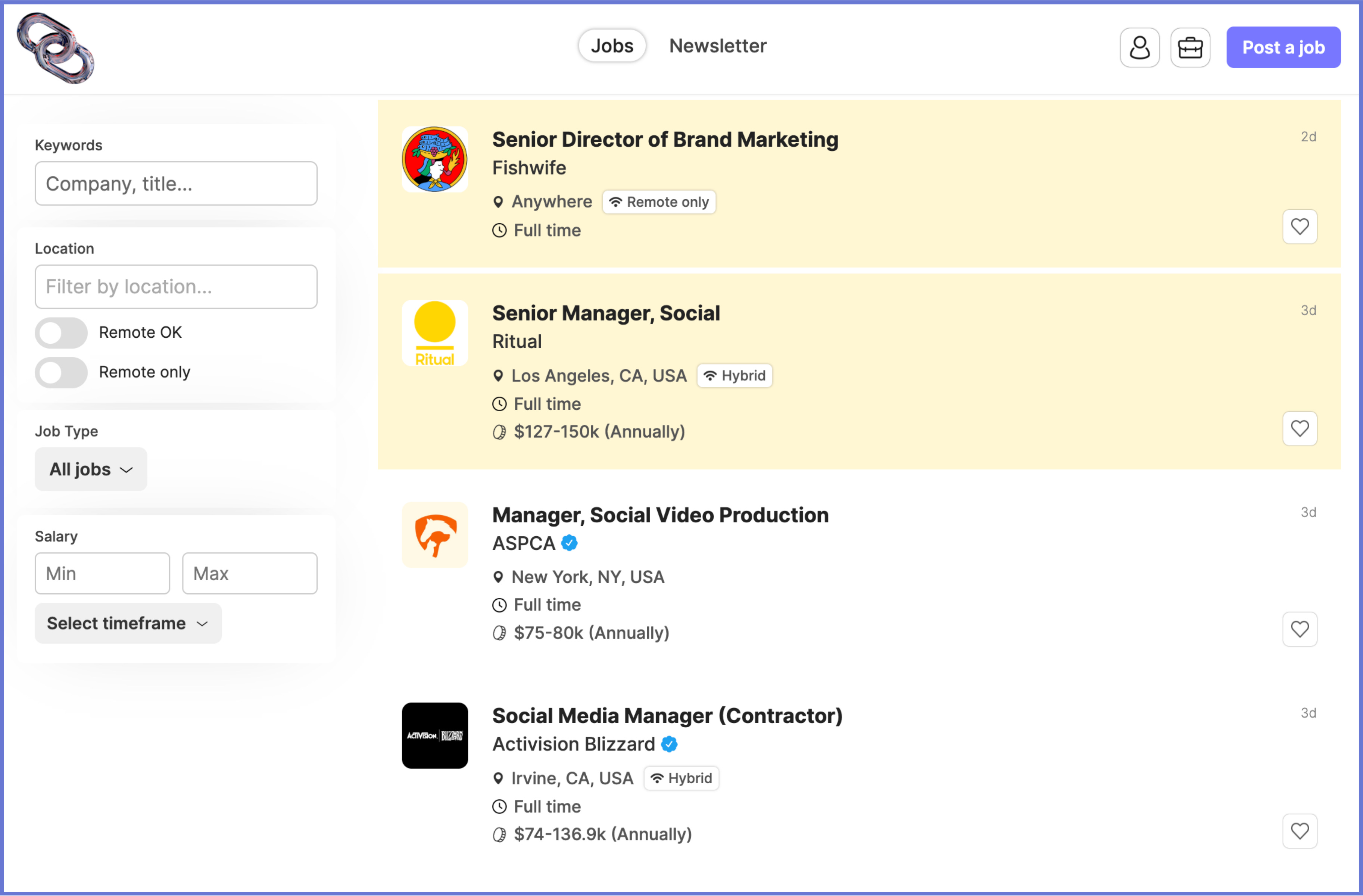
The Link in Bio Job Board features all of the best social media roles in one place, updated daily. Right now there are roles from places like Fishwife, Ferrari, Ritual, and more.
If you work for a brand that’s hiring within social media, this job board is for you too. Post your job listings to get in front of talented social media marketers.
This was super interesting, thanks for sharing this chat! I find it super helpful to hear about others process in case it helps optimize my own or sometimes, just for validation that yes, we're all still getting scrappy when needed 🤭